
Tyre valve leaks and replacement
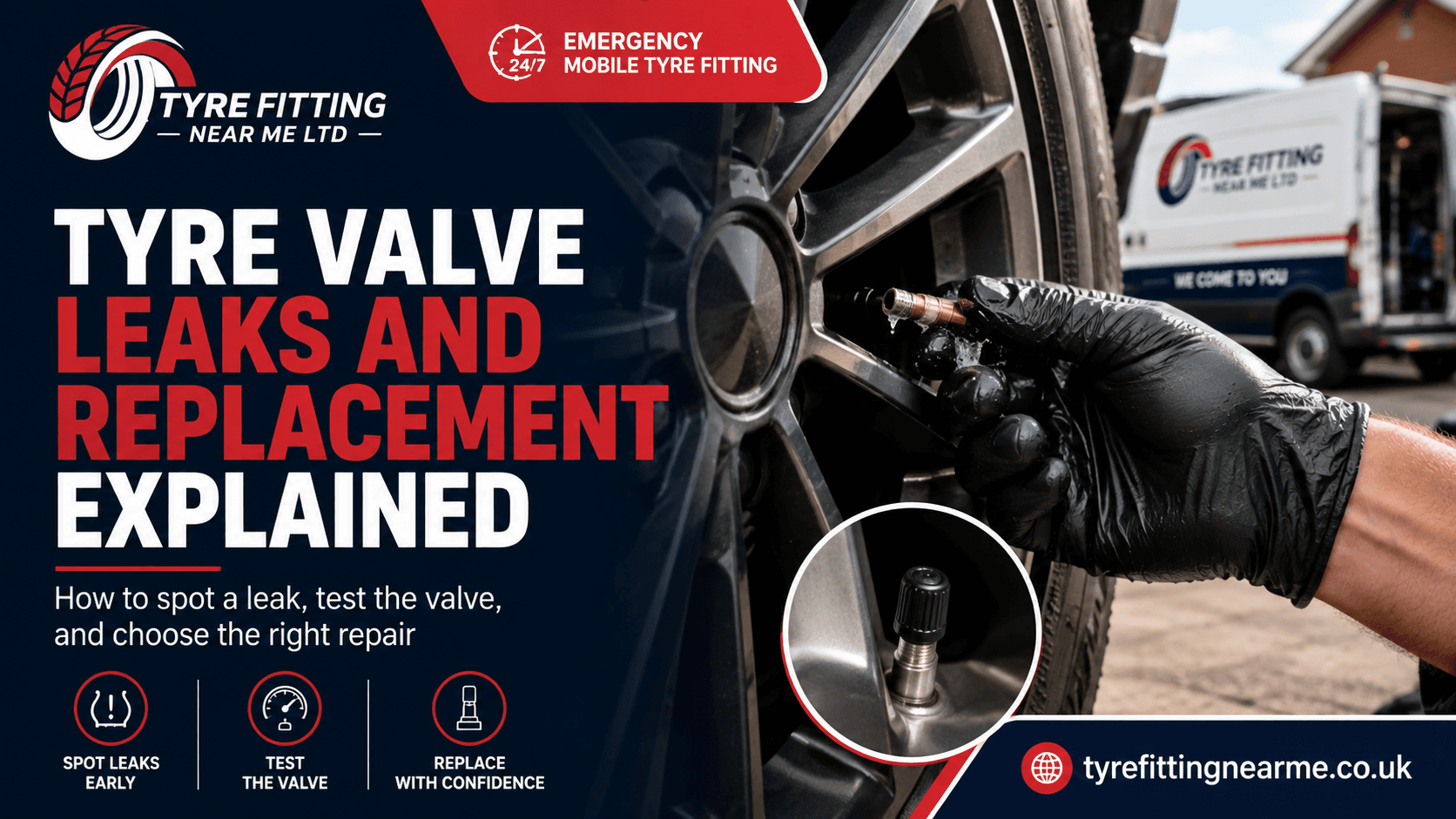
A tyre valve leak usually causes slow pressure loss and can come from the valve core, valve stem, valve base, rim seal, or TPMS valve. A valve core may be tightened or replaced, but a cracked stem, corroded base, or TPMS valve usually needs professional replacement.
UK drivers often notice valve leaks after one tyre keeps losing pressure without a visible nail or screw. The guide explains how to test the valve, separate core leaks from stem leaks, compare valve faults with punctures, and choose safe repair through mobile tyre repair for pressure loss when the tyre needs professional inspection.
How do you know if your tyre valve is leaking?
A leaking tyre valve usually shows repeated pressure loss, hissing near the valve, bubbles during a soap test, or a TPMS warning after inflation. A driver should test the valve before assuming a tread puncture, because a loose valve core can lose air while the tyre tread remains undamaged. A pressure gauge and soapy water confirm the fault.
What are the signs of a leaking tyre valve?
A leaking tyre valve creates pressure symptoms before it creates obvious tyre damage. A driver may notice one tyre going soft, repeated air top-ups, a faint hiss at the valve, or a dashboard tyre pressure warning. A slow valve leak can look like a slow puncture causes and what to do problem when the leak location has not been tested.
One tyre loses pressure faster than the other tyres.
The valve area makes a faint hissing sound after inflation.
The TPMS warning light returns after the tyre has been inflated.
The tyre shows no visible nail, screw, tread cut, or sidewall damage.
The valve stem looks cracked, bent, perished, corroded, or misaligned.
How does the soapy water bubble test confirm a valve leak?
The soapy-water bubble test confirms a tyre valve leak by making escaping air visible. A driver sprays the valve opening, valve stem, and valve base with water mixed with washing-up liquid. Continuous bubbles show an active air leak, while no valve bubbles push the diagnosis toward tread damage, bead leakage, or a nail or screw in tyre.
Inflate the tyre to the vehicle manufacturer’s recommended pressure.
Remove the valve cap and inspect the valve opening for dirt or damage.
Spray soapy water across the valve core, stem body, and base.
Watch for steady bubbles for 20 to 30 seconds.
Repeat the test around the tread and bead when the valve shows no bubbles.
How can a pressure gauge help confirm slow pressure loss?
A pressure gauge confirms slow pressure loss by recording a baseline PSI and comparing the same tyre later. A driver should check the tyre cold, inflate it to the recommended pressure, and measure the same tyre again after several hours. A repeated PSI drop supports a leak diagnosis and justifies a free tyre health check for valve and pressure.
Where is the air escaping from around the tyre valve?
Air escaping inside the valve opening usually means a valve core fault, while bubbles on the rubber stem suggest cracking or perishing. Bubbles at the valve base point toward a rim-hole seal, corrosion, or TPMS hardware issue. No valve bubbles means the driver should inspect the tread, bead, sidewall, or wheel rim.
What does bubbling inside the valve opening mean?
Bubbling inside the valve opening usually identifies a leaking valve core. The valve core is the removable spring-loaded insert that opens during inflation and closes to retain tyre pressure. A loose, dirty, damaged, or overtightened core can allow compressed air to escape after the inflator has been removed.
What does bubbling around the valve stem mean?
Bubbling around the valve stem usually identifies a cracked, perished, bent, or porous rubber stem. A rubber valve stem flexes during driving, weather exposure, and pressure checks, so age and movement can weaken the rubber body. A stem-body leak usually needs full valve stem replacement rather than a core-only repair.
What does bubbling at the valve base or rim mean?
Bubbling at the valve base usually identifies a poor seal where the stem passes through the wheel rim. Alloy-wheel corrosion, dirt around the rim hole, incorrect seating, or TPMS sealing hardware can allow air to escape around the base. A base leak needs bead access, rim-hole cleaning, and professional repair through mobile tyre fitting at home or roadside.
What if no bubbles appear at the valve?
No bubbles at the valve means the pressure loss may come from the tread, bead, sidewall, or wheel rim. A nail, screw, bead leak, cracked alloy, or unsafe sidewall defect can copy the symptoms of a leaking valve. A driver should compare the result with can a puncture be repaired before choosing repair or replacement.
Bubble location Likely fault Correct repair route DIY or professional? Inside valve opening Loose, dirty, or damaged valve core Tighten or replace the removable valve core DIY possible with the correct core tool Around rubber stem body Cracked, perished, porous, or bent valve stem Replace the complete valve stem Professional repair normally required At valve base near rim Base seal failure, rim-hole corrosion, or poor seating Clean the rim hole and replace the valve Professional repair required Around TPMS metal valve Grommet, washer, nut, stem, or sensor-seal problem Fit a TPMS service kit or replace the sensor valve TPMS-trained technician required No bubbles at valve Tread puncture, bead leak, rim crack, or sidewall damage Inspect tyre and wheel under safe repair rules Tyre specialist required
What causes tyre valves to leak?
Tyre valves leak when the sealing path between the valve core, stem body, rim hole, or TPMS hardware loses airtight contact. Common causes include a loose core, dirt contamination, rubber ageing, metal corrosion, fitting damage, and poor valve seating. Each cause affects a different component, so diagnosis should separate core faults from stem and base faults.
Why does a valve core leak?
A valve core leaks when its internal seal cannot close the inflation pathway. Dirt, moisture, damaged threads, incorrect tightening, or a worn spring mechanism can stop the core from sealing. A removable core can often be replaced without removing the tyre, which makes core leakage the simplest valve-related repair route.
Why does a rubber valve stem crack or perish?
A rubber valve stem cracks when age, weather exposure, road salt, heat cycles, and repeated flexing weaken the rubber body. The stem sits outside the rim, so it faces water, grit, kerb contact, and movement during pressure checks. A cracked rubber stem usually needs replacement because external sealant does not rebuild the valve body.
Why can corrosion cause a valve leak?
Corrosion causes valve leaks by disturbing the seal around the rim hole or metal valve hardware. Winter road salt and moisture can attack alloy-wheel surfaces, retaining nuts, washers, and TPMS valve stems. A corroded base leak needs inspection because the rim interface, not only the rubber valve, may be losing pressure.
Can tyre fitting damage cause a valve leak?
Tyre fitting damage can cause a valve leak when a stem seats incorrectly, a rim hole stays dirty, or TPMS hardware gets stressed during tyre removal. A bead-breaking operation exposes the valve from inside the wheel, so correct seating matters. A new valve during fitting reduces repeat pressure loss after tyre work.
Cause Affected valve entity Common condition Repair direction Dirt or debris Valve core seal Contaminated sealing surface Clean or replace valve core Rubber ageing Valve stem body Cracked, perished, or porous rubber Replace full stem Road salt corrosion Rim hole or metal valve Corroded contact surface Clean rim and replace valve hardware Incorrect fitting Valve base Poor seating or damaged grommet Refit valve and verify pressure TPMS hardware wear Sensor valve assembly Failed grommet, washer, nut, or stem Fit TPMS service kit or sensor valve
Can a leaking tyre valve be repaired?
A leaking tyre valve can be repaired when the fault is limited to the removable valve core. A cracked valve stem, corroded valve base, damaged rim interface, or leaking TPMS valve usually needs replacement or professional service. A driver should match the repair to the leak location, because wrong repair methods can leave the tyre underinflated.
When can a valve core be tightened or replaced?
A valve core can be tightened or replaced when bubbles form inside the valve opening. A core tool turns the removable insert, and a replacement core restores the internal seal. A driver should avoid overtightening because damaged threads or crushed seals can create another leak.
When does the whole valve stem need replacement?
The whole valve stem needs replacement when bubbles appear around the rubber body or valve base. A cracked stem cannot hold air reliably because the rubber structure has failed. A technician normally unseats the tyre bead, removes the old stem from the rim hole, and fits a new valve.
When does a TPMS valve need professional service?
A TPMS valve needs professional service when pressure loss comes from the sensor valve, metal stem, grommet, washer, retaining nut, or sealing hardware. TPMS valves can affect dashboard pressure warnings and MOT confidence. A driver should use TPMS service and sensor replacement when the warning light returns after inflation.
When is the leak actually a puncture or bead problem?
A leak is not a valve leak when bubbles form in the tread, shoulder, sidewall, bead seat, or wheel rim instead of the valve. A small central tread puncture may need mobile puncture repair to BS AU 159, while sidewall damage usually needs replacement. A driver should read repairable vs non repairable punctures when the valve test shows no bubbles.
Fault found Can the valve be repaired? Correct fix Tyre removal needed? Loose valve core Yes Tighten the core with a valve core tool No Damaged valve core Yes Replace the removable core No Cracked rubber stem No Replace the full valve stem Usually yes Valve base leak No Inspect rim hole and replace valve Usually yes TPMS valve leak Sometimes Fit TPMS service kit or replace sensor valve Usually yes
How do you fix a leaking valve core?
A leaking valve core is fixed by checking the core with soapy water, tightening it gently with a valve core tool, replacing it when the seal or threads are damaged, reinflating the tyre, and retesting for bubbles. A driver should only attempt this repair when the leak comes from the valve opening rather than the stem or base.
What tools are needed to replace a valve core?
A valve core repair needs only a small set of pressure and sealing tools. A valve core tool removes or tightens the insert, while a pressure gauge checks the repair result. A tyre inflator restores the correct pressure after the core has been tightened or replaced.
Tool Purpose Needed for Valve core tool Tightens or removes the core Core repair and core replacement Replacement valve core Restores the internal seal Damaged or dirty core faults Tyre pressure gauge Measures PSI before and after repair Leak confirmation and retesting Tyre inflator Restores correct tyre pressure Post-repair inflation Soapy water spray Shows escaping air as bubbles Leak-location testing
What are the steps to tighten or replace the core?
A valve core process should stay controlled because the tyre holds compressed air. A driver should work on a parked vehicle, avoid live roadside positions, and stop the repair when bubbles appear around the stem or base instead of the core. A cracked valve stem needs professional replacement, not core work.
Park the vehicle safely and check the tyre pressure with a gauge.
Remove the valve cap and apply soapy water to the valve opening.
Turn the valve core gently clockwise with the core tool when the core feels loose.
Remove and replace the core when bubbles continue after gentle tightening.
Inflate the tyre to the manufacturer’s recommended pressure.
Spray the valve opening again and check for steady bubbles.
How do you retest the valve after repair?
A repaired valve core must pass a bubble test and a pressure check. A driver should spray the valve opening again, fit a clean valve cap, record the cold PSI, and check the same tyre later. Repeat pressure loss needs professional diagnosis through free tyre health check with valve inspection.
Does the tyre need to come off to replace the valve stem?
The tyre usually needs bead access when the full valve stem must be replaced, because the valve stem passes through the wheel rim from the inside. A technician normally deflates the tyre, breaks or unseats the bead, removes the old valve, cleans the rim hole, fits the replacement valve, reinflates the tyre, and tests for leaks.
Why does full valve stem replacement need bead access?
Full valve stem replacement needs bead access because the stem locks into the rim hole from inside the tyre-and-wheel assembly. The outer rubber tube is only the visible part of the valve. A technician must access the inner valve base to remove the old stem and seat the replacement correctly.
How is a tyre valve stem replaced by a tyre technician?
A tyre technician replaces a valve stem through a controlled fitting process. The process protects the bead, rim hole, tyre pressure seal, and wheel balance. Our technicians treat steady bubbles at the stem base as a replacement signal, not a sealant job, because the base seal controls pressure retention.
The technician records the tyre position and pressure condition.
The technician deflates the tyre in a controlled setting.
The technician breaks or unseats the bead near the valve area.
The technician removes the damaged valve stem from the rim hole.
The technician cleans corrosion, dirt, or residue from the valve hole.
The technician fits the correct rubber, metal, or TPMS-compatible valve.
The technician reinflates the tyre to the correct pressure.
The technician retests the valve and bead area for bubbles.
When is wheel balancing needed after valve work?
Wheel balancing may be needed when tyre removal, bead breaking, or wheel refitting changes the wheel-and-tyre assembly. A driver should book on-site wheel balancing after tyre fitting when vibration, steering shake, uneven wear, or recent bead work affects the wheel. The guide how mobile tyre fitting works explains how balancing fits into the mobile process.
Repair type Tyre removal or bead access Reason Service boundary Valve core tightening No The removable core sits inside the valve opening DIY possible when the vehicle is parked safely Valve core replacement No The core removes through the outer valve opening DIY possible with correct tool and pressure control Rubber stem replacement Usually yes The stem seats through the rim from inside Tyre technician normally required Base leak repair Usually yes The rim-hole seal must be inspected and cleaned Tyre technician required TPMS valve repair Usually yes The sensor valve and sealing hardware sit inside the wheel TPMS-trained technician required
What changes if the tyre valve has TPMS?
A TPMS valve changes the repair because the valve may be attached to an electronic pressure sensor inside the wheel. A leak can come from the stem, sealing washer, grommet, retaining nut, or sensor valve hardware. Incorrect tools, sealant, or overtightening can damage the sensor and increase the final replacement cost.
How is a TPMS valve different from a standard valve?
A TPMS valve contains or connects to a tyre pressure sensor that monitors tyre pressure and communicates a warning to the driver. A standard rubber valve mainly holds air through the stem and valve core. A TPMS valve adds electronic hardware, sealing components, and sometimes a reset requirement after repair.
Which TPMS valve parts can leak?
TPMS valve leaks often come from the sealing kit rather than the sensor body. The grommet, washer, retaining nut, valve core, stem, and sensor housing all create possible air paths. A driver should choose TPMS sensor service for tyre pressure warning lights when the warning light stays active after inflation.
Why should TPMS sealant or incorrect tools be avoided?
TPMS sealant and incorrect tools should be avoided because the sensor valve relies on clean pressure passages and accurate sealing hardware. Liquid sealant can clog valve cores and interfere with TPMS components. A driver comparing quick fixes should read do tyre sealants work before using sealant on a pressure-loss fault.
Attribute Standard rubber valve TPMS valve Repair impact Main function Holds and releases tyre air Holds air and supports pressure monitoring TPMS repair needs sensor awareness Visible parts Stem, cap, and valve core Metal or rubber stem and cap TPMS sensor sits inside wheel Leak points Core, stem body, and base Core, grommet, washer, nut, stem, sensor seal TPMS has more sealing interfaces Service requirement Core repair or stem replacement Service kit, valve stem, sensor test, reset TPMS-trained service reduces sensor damage risk Cost behaviour Lower parts and labour Higher parts and possible programming TPMS quotes should separate seal kit and sensor cost
How much does tyre valve replacement cost in the UK?
Tyre valve replacement cost in the UK depends on whether the job involves a valve core, a standard rubber stem, a metal valve, or TPMS hardware. A standard valve repair is usually cheaper than TPMS work because TPMS parts include sensor-related seals and possible reset steps. Mobile call-out, wheel type, and tyre removal can change the fitted price.
What does a standard valve core or stem repair cost?
A standard valve core repair usually costs less than full stem replacement because the tyre does not need bead access. A standard rubber valve stem replacement often sits in the lower labour range, especially during tyre fitting. A driver comparing repair pricing should read puncture repair cost when the leak may come from tread damage instead of the valve.
What does TPMS valve replacement cost?
TPMS valve replacement costs more because the job may involve a service kit, sensor valve, sealing hardware, sensor test, and reset. A TPMS quote should separate a valve service kit from a complete sensor replacement. The final price should include pressure testing, sensor diagnosis, and reset confirmation.
What affects the final fitted price?
The final fitted price changes with valve type, tyre access, wheel condition, corrosion, TPMS parts, mobile call-out, and emergency timing. A same-day mobile repair may cost more than valve replacement during planned fitting. A driver can compare wider fitting charges through mobile tyre fitting price.
Repair type Typical UK cost guide What affects the price? Best next action Valve core tightening Low-cost check or minor labour Access, pressure test, and retest time Ask for leak diagnosis before replacement Valve core replacement Usually below a full stem replacement Core part, tool use, pressure check, retest Confirm bubbles come from valve opening Standard rubber stem replacement Often quoted around £10 to £25 per valve in UK service content Tyre bead access, labour, wheel condition Request a fitted price with leak test Metal or clamp-in valve replacement Usually higher than standard rubber valve work Metal hardware, corrosion, nut, washer, seal Ask whether the valve is standard or clamp-in TPMS valve or sensor work Can rise sharply when sensor replacement is needed Service kit, sensor, reset, programming, labour Ask for service-kit and sensor prices separately
Can you drive with a leaking tyre valve?
A driver should not continue normal driving with a leaking tyre valve when pressure is dropping quickly, the tyre is visibly underinflated, or the valve is damaged or misaligned. Underinflation reduces handling stability, braking performance, and tyre durability. A driver should stop safely and arrange repair when the tyre cannot hold pressure.
When is a slow valve leak unsafe?
A slow valve leak becomes unsafe when the tyre cannot hold the recommended pressure for the journey. Underinflation increases heat, shoulder wear, steering instability, and braking risk. A driver should compare the risk with can you drive on a flat tyre when pressure drops quickly.
What should you do if the tyre loses pressure quickly?
A fast pressure loss needs a stop-and-check response. The driver should move to a safe place, avoid driving on a visibly soft tyre, and call roadside or mobile tyre support when the tyre cannot hold pressure. A stranded driver should use 24/7 emergency tyre fitting for rapid pressure loss when the vehicle cannot be driven safely.
What motorway or roadside safety limits apply?
Motorway or roadside tyre work needs strict safety boundaries because traffic speed creates a separate risk from the valve leak. A mobile tyre service should not imply valve replacement can be performed in live lanes or unsafe hard-shoulder conditions. A safe location comes before any tyre repair, fitting, valve work, or wheel balancing.
Leak severity Driving decision Recommended action Safety reason Minor pressure drop over days Short local drive may be possible after inflation Book valve leak inspection quickly Slow pressure loss can worsen without warning Pressure drops overnight Driving should be limited Inflate, test valve, and arrange repair Tyre may become underinflated during use Visible soft tyre Do not continue normal driving Stop safely and call tyre support Underinflation can damage tyre structure Hissing or rapid bubbles Do not rely on the tyre for travel Use emergency support from a safe location Rapid air loss can cause sudden deflation Damaged or misaligned valve Do not treat as a minor leak Request professional inspection before travel Valve failure can cause sudden pressure loss
How do you prevent tyre valve leaks?
Tyre valve leaks are prevented through regular pressure checks, clean valve caps, careful inflation, valve inspection, and replacement during tyre fitting when the bead is broken. A driver should check valves for cracking, corrosion, dirt, and movement before long trips. TPMS valves need service-kit attention because their seals age separately from the tyre tread.
Should tyre valves be replaced with new tyres?
Tyre valves should usually be replaced when new tyres are fitted or when the tyre bead is broken for service. A fresh valve reduces repeat pressure loss after fitting. A driver choosing replacement tyres can compare value with part-worn vs new tyres before spending money on older rubber.
How do valve caps help prevent leaks?
Valve caps help prevent leaks by blocking dirt, dust, water, and road salt from entering the valve opening. A cap also protects the valve core from contamination during wet or winter driving. A missing cap does not always cause immediate pressure loss, but it increases the chance of core-seal contamination.
How often should tyre pressures and valves be checked?
Tyre pressures and valves should be checked at least monthly and before long journeys. A driver should inspect valve caps, rubber cracking, stem alignment, rim corrosion, and TPMS warnings during each check. Fleet drivers should use van tyre fitting for fleet pressure faults when repeated pressure loss affects working vehicles.
Preventive action Why it helps Suggested frequency Check tyre pressure cold Shows slow pressure loss before tyre damage starts Monthly and before long journeys Keep valve caps fitted Protects the valve core from dirt and moisture Every pressure check Inspect rubber stems Finds cracks, perishing, bending, and damage Monthly and during tyre fitting Replace valves with new tyres Prevents old valve failure after bead work During tyre replacement Service TPMS hardware Refreshes grommets, washers, nuts, and seals During TPMS valve work
Need a safe tyre valve leak check?
A leaking valve can become a puncture-style safety problem when pressure keeps dropping. Book mobile tyre fitting at your location, request mobile tyre repair for valve and puncture checks, or call 0788 328 8831 for same-day help.
What questions do drivers ask about tyre valve leaks and replacement?
Drivers usually ask whether a tyre valve leak can be repaired, whether the tyre must come off, how much replacement costs, and whether driving remains safe. The correct answer depends on the leaking component: valve core, rubber stem, valve base, TPMS hardware, bead, or puncture.
Can a valve stem leak be repaired without removing the tyre?
A valve stem leak can only be repaired without removing the tyre when the valve core is the leaking part. A loose or damaged core removes through the valve opening with a core tool. A cracked rubber stem, leaking valve base, corroded rim hole, or TPMS valve fault usually needs bead access and professional replacement.
How much does a valve stem replacement cost in the UK?
A standard valve stem replacement in the UK often sits around £10 to £25 per valve in tyre-service content, but the fitted price depends on labour, wheel type, corrosion, and mobile call-out. TPMS valve work costs more because sensor-related seals, reset steps, or sensor replacement may be required.
Is driving with a leaking tyre valve dangerous?
Driving with a leaking tyre valve can be dangerous when the tyre loses pressure during the journey. Underinflation can reduce grip, braking performance, steering stability, and tyre durability. A driver should stop safely, avoid live-traffic repair attempts, and request emergency help when the tyre cannot hold pressure.
Can tyre sealant fix a valve stem leak?
Tyre sealant should not be treated as a permanent fix for a valve stem leak. Sealant cannot repair cracked rubber, corroded valve bases, or damaged TPMS sealing hardware. Sealant can also clog valve cores or interfere with TPMS components, so a technician should identify the leak location before any repair method is chosen.
Will a valve cap stop a tyre valve leak?
A valve cap will not reliably stop an active tyre valve leak. A cap protects the valve core from dirt, dust, water, and road salt, but the internal core or stem seal still holds the tyre pressure. A missing cap can contribute to contamination, so a cap should be replaced after the valve has been tested.
Can dirt cause a valve core to leak?
Dirt can cause a valve core to leak when debris blocks the internal sealing surface. The valve core closes the inflation pathway after air enters the tyre, so grit or moisture can stop the seal from closing cleanly. A core can sometimes be cleaned or replaced without removing the tyre from the wheel.
Can a leaking tyre valve trigger TPMS?
A leaking tyre valve can trigger TPMS when pressure drops below the vehicle’s monitoring threshold. The dashboard warning may show because air escapes through the valve core, stem, valve base, or TPMS sealing hardware. A driver should inflate the tyre to the correct pressure, test for bubbles, and repair the leak source.
Is it a tyre valve leak or a slow puncture?
A tyre valve leak comes from the valve opening, stem, base, or TPMS hardware, while a slow puncture usually comes from the tread or tyre structure. The soapy-water test separates the two by showing where bubbles form. No valve bubbles should move the inspection toward the tread, bead, sidewall, and wheel rim.
Can a tyre valve be replaced without removing the tyre?
A tyre valve core can be replaced without removing the tyre, but a full valve stem usually cannot. The stem seats through the rim from inside the tyre-and-wheel assembly, so replacement normally needs bead access. TPMS valve work also usually needs professional access because the sensor and sealing hardware sit inside the wheel.
How long does tyre valve replacement take?
Tyre valve replacement time depends on the valve type and access needed. A valve core repair can take only a few minutes after safe parking and pressure control. A full stem or TPMS valve replacement takes longer because the technician may need to deflate the tyre, break the bead, clean the rim hole, and retest pressure.