
Slow puncture causes and what to do
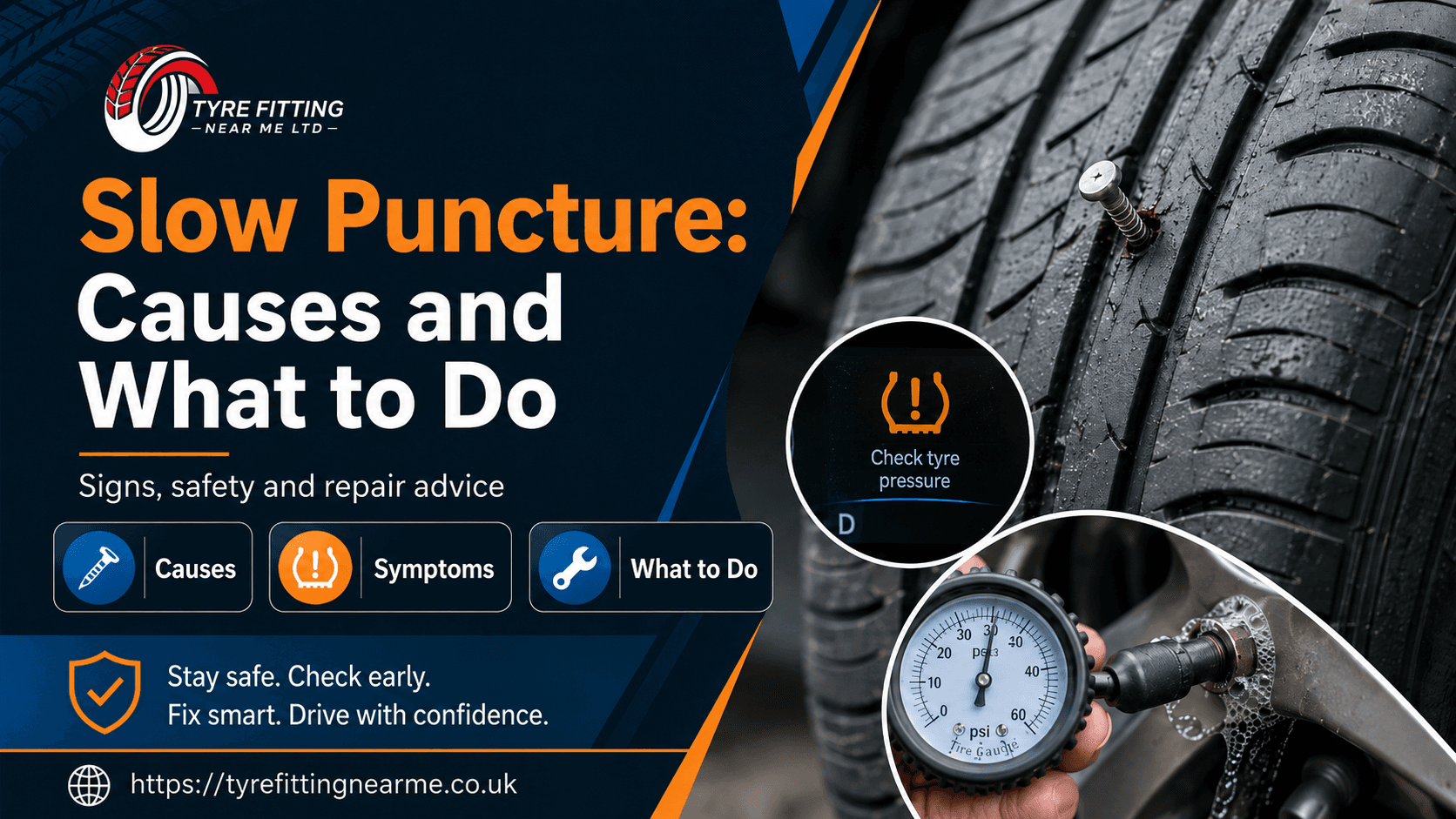
A slow puncture happens when a tyre loses air gradually through a small leak, often caused by a nail, screw, leaking valve, damaged bead seal or corroded wheel rim. Check the tyre pressure, inspect for visible damage, avoid long journeys, leave embedded objects in place, and book a professional tyre inspection or repair.
Many UK drivers discover a slow puncture after one tyre needs regular air top-ups, a TPMS warning keeps returning, or the vehicle starts pulling to one side. This guide explains the causes, symptoms, safe checks, repairability rules, mobile puncture repair options, and prevention steps using TyreSafe repair guidance, GOV/DVSA tyre condition context, and National Highways motorway safety advice.
What Is a Slow Puncture?
A slow puncture is a gradual tyre air leak that lowers pressure over hours, days or sometimes longer, rather than causing an immediate flat tyre. The leak can come from the tread, valve, bead seat, wheel rim or damaged sidewall. A driver usually notices repeated inflation, a TPMS warning, soft tyre appearance or changing handling before the tyre becomes unusable.
Gradual tyre pressure loss
Gradual tyre pressure loss means the tyre cannot hold the manufacturer-recommended PSI for a normal period. A small puncture, leaking valve or poor bead seal allows compressed air to escape from the tyre cavity slowly. The pressure drop may happen while the vehicle is parked or while the vehicle is driven.
A pressure gauge gives the clearest first signal because visual tyre shape can hide early underinflation. A driver should compare the affected tyre with the other tyres on the same axle. Consistent pressure loss from one tyre points toward a leak rather than normal temperature variation.
Slow puncture vs sudden flat tyre
Tyre issue Main attribute Driver action Slow puncture Air pressure drops gradually over hours, days or weeks Check pressure, inspect safely, and arrange professional inspection Sudden flat tyre Air pressure drops rapidly and the tyre may become undriveable Stop safely, avoid driving on the flat tyre, and call help where needed Temperature-related pressure drop All tyres may lose pressure during colder weather Adjust pressure to manufacturer guidance and monitor for repeat loss
What Causes a Slow Puncture?
A slow puncture is usually caused by a small opening or poor seal that lets air escape from the tyre-and-wheel assembly. Common causes include a nail or screw in the tread, a leaking valve stem, a loose valve core, a damaged bead seal, alloy wheel corrosion, pothole impact, tyre ageing, sidewall cuts and temperature-related pressure changes that reveal an existing leak.
Cause Where the leak happens Common sign Likely next step Nail, screw or glass Tyre tread One tyre loses pressure repeatedly Book a puncture inspection before removing the object Leaking valve stem Valve base or rubber valve body Bubbles appear around the valve during a soapy water check Ask a tyre professional to replace or inspect the valve Loose valve core Inside the valve stem Air escapes from the valve centre Ask a tyre professional to check the core and valve assembly Damaged bead seal Where the tyre bead meets the rim Bubbles appear around the wheel edge Ask for bead resealing, rim cleaning or tyre replacement advice Alloy wheel corrosion Rim or bead seat Pressure loss continues with no visible nail Ask for wheel rim inspection before replacing the tyre Sidewall cut or bulge Tyre sidewall or shoulder Visible cut, bulge, cracking or deformation Stop driving where unsafe and arrange tyre replacement advice
Sharp objects in the tyre tread
Sharp objects create small air channels when they pierce the tyre tread. Nails, screws, glass and metal fragments often stay embedded in the rubber, which can slow the leak and hide the damage. A visible object in the tread needs professional assessment before any repair decision.
A driver should not pull out an embedded nail or screw because the object may be slowing the air loss. Removing the object can turn a slow leak into rapid deflation. Professional removal allows the tyre technician to inspect the puncture path and internal liner.
Valve, bead and wheel rim leaks
Valve, bead and wheel rim leaks cause slow pressure loss without an obvious tread puncture. A cracked valve stem, loose valve core or damaged valve seal can release air near the inflation point. A corroded alloy wheel can also break the airtight seal between the tyre bead and the rim.
Our mobile tyre fitters treat repeated pressure loss with no visible nail as a leak-location diagnosis, not as a simple air top-up. A soapy water check around the valve and rim edge often separates a valve leak from a bead leak. A professional inspection confirms whether resealing, valve replacement, wheel work or tyre replacement is needed.
Potholes, tyre age and sidewall damage
Pothole impact can damage the tyre sidewall, wheel rim or bead area. Tyre ageing can also create cracking, weakened rubber or poor sealing around the wheel. Sidewall cuts, bulges and exposed structural damage usually move the tyre from repair assessment toward replacement advice.
The GOV/DVSA MOT tyre condition inspection rules for tread, valves and sidewalls provide official context for roadworthiness checks. A tyre with visible structural damage needs safety-led assessment before any local journey.
What Are the Signs of a Slow Puncture?
The main signs of a slow puncture are repeated low tyre pressure, a TPMS warning light, one tyre looking softer than the others, pressure loss overnight, steering pull, vibration, sluggish handling and frequent air top-ups. A slow puncture can also look like a wheel alignment or balancing problem, so pressure checks should come before assumptions about suspension or tracking.
Symptom What the symptom may mean Urgency level One tyre needs air every few days Likely slow leak from tread, valve, rim or bead Book inspection soon TPMS warning returns after inflation Pressure loss may still be active Check pressure and arrange diagnosis Vehicle pulls to one side One tyre may have lower pressure than the others Check pressure before further journeys Steering wheel vibrates Low pressure or imbalance may affect wheel behaviour Reduce speed and arrange inspection Tyre looks flat or heavily deflated Pressure may be too low for safe driving Stop driving and seek help where needed
Pressure loss and TPMS warnings
Pressure loss and TPMS warnings give the earliest signals on many modern vehicles. The tyre pressure monitoring system alerts the driver when one or more tyres fall below the expected pressure range. A returning warning after inflation suggests a live leak, incorrect reset or sensor-related issue.
A driver should confirm the warning with a manual pressure gauge because TPMS data needs physical verification. The related guide on tyre pressure warning light caused by air loss should support deeper TPMS diagnosis. Manual pressure readings then guide the next inspection step.
Pulling, vibration and poor handling
Pulling, vibration and poor handling can appear when tyre pressure becomes uneven across the axle. A low-pressure tyre changes the contact patch, steering response and braking feel. The driver may notice the vehicle drifting during straight-line travel or feeling heavy during cornering.
Wheel alignment and wheel balancing can cause similar symptoms, so pressure should be checked first. A slow puncture can create vibration at higher speeds because the tyre shape and load distribution change. A professional inspection can separate pressure loss from balancing or alignment faults.
Tyre losing pressure overnight
A tyre losing pressure overnight suggests a leak rate that has become more urgent. The leak may come from a puncture hole, valve leak, bead leak or rim corrosion. Cold temperatures can reduce pressure, but one tyre losing pressure faster than the others usually points toward a tyre-specific problem.
A driver should avoid treating overnight pressure loss as normal maintenance. Repeated overnight deflation increases the risk of sidewall damage if the vehicle moves on an underinflated tyre. The next step is a pressure check followed by professional leak diagnosis.
How Do You Check for a Slow Puncture?
You can check for a slow puncture by measuring cold tyre pressure, comparing all four tyres, inspecting the tread and sidewall, checking the valve area, looking around the rim, and using soapy water to spot bubbles from escaping air. Safe checks should happen off the road, and permanent puncture repair should be left to a tyre professional.
Park the vehicle in a safe, level place away from moving traffic.
Check the tyre pressure when the tyre is cold.
Compare the affected tyre with the other tyres on the vehicle.
Inspect the tread for nails, screws, glass and cuts.
Inspect the sidewall for cracking, bulges and impact marks.
Spray soapy water around the tread, valve and rim edge.
Watch for bubbles that show escaping air.
Book a professional inspection if pressure loss continues.
Check cold tyre pressure first
Cold tyre pressure gives the most useful baseline because heat from driving can alter readings. The correct PSI should come from the vehicle handbook, fuel flap label or door pillar label. A driver should compare the measured pressure with the manufacturer-recommended pressure, not with a guess from the tyre sidewall.
A single low tyre deserves closer inspection when the other tyres hold pressure normally. A pressure record over several days can show the leak rate. The related recommended tyre pressure for your vehicle guide should support pressure-check accuracy.
Inspect tread, sidewall, valve and rim
A visual inspection should cover the tread, shoulder, sidewall, valve and rim edge. The tread may show a nail, screw or glass fragment. The sidewall may show cuts, cracks, bulges or impact damage that makes the tyre unsafe.
The valve area needs a close look because valve stems can crack and valve cores can leak. The rim edge needs inspection because alloy corrosion can break the bead seal. A tyre technician can remove the wheel and confirm hidden damage that a surface check cannot prove.
Use soapy water to look for bubbles
Soapy water can reveal a leak because escaping air creates bubbles at the leak point. A driver can spray the tread, valve base, valve centre and rim edge while the tyre has safe pressure. Bubbles around the tread point toward a puncture, while bubbles around the wheel edge point toward bead or rim leakage.
A soapy water check does not prove repairability because internal tyre damage may still exist. TyreSafe explains that permanent repairs require professional inspection and repair under British Standard guidance. A bubble location helps the driver explain the fault to the tyre fitter.
Can You Drive With a Slow Puncture?
You should avoid driving with a known slow puncture because pressure loss can reduce handling, braking stability and tyre structure. A short local trip to a tyre professional may be reasonable only when the tyre holds the recommended pressure, shows no sidewall damage, and the vehicle handles normally. Motorway, long-distance or heavily loaded driving increases risk.
Situation Risk level Safe next action Tyre holds recommended pressure after inflation and has no visible damage Amber Drive only a short local distance to a tyre professional if handling feels normal Tyre loses pressure again within hours or overnight High Avoid unnecessary driving and book mobile puncture inspection Tyre looks flat, has sidewall damage, or the vehicle pulls heavily Red Stop driving and call roadside help or mobile tyre support Vehicle is on a motorway or live lane Red Follow motorway safety advice and call breakdown recovery
When driving may be limited to a short local trip
A short local trip may be possible when the tyre reaches the manufacturer-recommended pressure and holds pressure during the immediate check. The vehicle should also steer, brake and corner normally. The destination should be a tyre professional, not a routine journey.
A driver should keep speed low and avoid carrying heavy loads when pressure loss is suspected. The related guide on driving safety after tyre pressure loss should support flat-tyre decisions. Any worsening handling should end the journey safely.
When you should stop and call for help
A driver should stop and call for help when the tyre is flat, visibly damaged, rapidly losing pressure or causing unstable handling. Sidewall cuts, bulges and exposed damage increase the risk level because the tyre structure may be compromised. Motorway locations need extra caution because roadside work can create serious danger.
National Highways gives specific motorway safety guidance for breakdown situations. The National Highways motorway breakdown safety advice should guide live-lane and hard shoulder decisions. A mobile tyre fitter should only attend where the vehicle is parked safely.
Why repeated inflation is not a fix
Repeated inflation replaces lost air but does not close the leak. A slow puncture can worsen when the puncture channel expands, the valve deteriorates or the tyre moves against a corroded rim. Underinflation can also damage the tyre internally before the driver sees clear external signs.
A driver who keeps topping up pressure may delay a low-cost repair until the tyre needs replacement. Professional inspection protects the tyre, wheel and vehicle handling. The repairability decision comes next because cause and location control the correct repair path.
Can a Slow Puncture Be Repaired?
A slow puncture can be repaired only when the damage sits in a repairable tread area, the puncture size and path meet repair standards, the tyre has safe tread and condition, and internal inspection shows no hidden damage. Sidewall, shoulder, bead, casing, liner damage, exposed cords, unsafe tread or previous non-compliant repairs usually mean replacement.
Damage location or condition Repair possible? Why Next action Central tread-area puncture Possible after inspection British Standard BS AU 159 allows repair only under defined conditions Ask a tyre professional to remove and inspect the tyre internally Sidewall or shoulder damage Usually no Sidewall and shoulder areas carry flex and structural load Arrange tyre replacement advice Bead, casing or liner damage No in most cases Structural or sealing damage can make the tyre unsafe Replace the tyre if the technician confirms unsafe condition Corroded rim or bead-seat leak Tyre repair may not solve it The wheel seal may be the source, not the tyre rubber Ask for rim inspection, cleaning, resealing or wheel repair advice Run-flat tyre driven underinflated Often not recommended Reinforced sidewalls can hide damaging underinflation stress Follow tyre manufacturer and technician advice
Repairable tread-area punctures
Repairable tread-area punctures usually sit within the central tread repair zone. TyreSafe explains that puncture repairs should follow British Standard BS AU 159 and depend on puncture location, tyre type and tyre condition. A technician must confirm the puncture path and inspect the tyre internally.
A small nail or screw puncture may be repairable when the tyre has not been driven flat. The repair method normally requires the wheel and tyre to be handled by a tyre specialist. The related mobile puncture repair for slow tyre leaks page should receive conversion traffic from repairable cases.
Non-repairable sidewall, shoulder or damaged tyres
Sidewall, shoulder, bead, casing or liner damage usually blocks a safe puncture repair. The sidewall flexes during driving and carries structural load, so repairs in that area can compromise tyre integrity. Tyres with cuts, cracks, bulges, exposed cords or unsafe tread need replacement advice.
The TyreSafe puncture repair rules for tyre location and condition provide authority-backed repairability context. A driver should treat visible sidewall damage as a safety issue. The related tyre replacement for sidewall damage or unsafe tread page should support non-repairable cases.
Why the tyre must be inspected internally
Internal inspection matters because external tyre appearance can hide liner damage, casing damage or heat damage from underinflation. A technician needs to remove the tyre from the wheel to see whether the inside structure remains safe. A surface plug without internal inspection may miss damage that affects roadworthiness.
British Standard BS AU 159 creates the repair framework that separates temporary mobility from permanent repair. Emergency sealant and roadside kits can move a vehicle temporarily, but they do not replace professional assessment. Repair method selection must follow cause, location and condition.
What Should You Do If You Find a Nail, Screw or Leak?
If you find a nail, screw or leak, leave the object in place, check the tyre pressure, inflate only to the vehicle-recommended PSI when safe, avoid long journeys, monitor pressure loss, and book a professional puncture inspection. A tyre professional can remove the object, inspect the tyre internally, confirm repairability and advise repair or replacement.
Leave embedded nails, screws or glass in place.
Check the tyre pressure with a reliable gauge.
Inflate the tyre only to the vehicle-recommended PSI if the tyre is not visibly damaged.
Avoid motorway driving, long journeys and heavy loads.
Book professional inspection before the leak worsens.
Call mobile tyre help where the vehicle is parked safely.
Do not remove embedded objects yourself
Embedded objects may be slowing the air leak by partially sealing the puncture channel. A driver who pulls out a nail or screw can create rapid pressure loss. A professional should remove the object only when the tyre can be inspected and repaired or replaced safely.
A visible nail in the central tread does not automatically mean the tyre can be repaired. Puncture angle, internal damage, tread condition and repair-zone position still matter. A booked inspection creates the safest route from discovery to repair decision.
Inflate only to the recommended pressure
The recommended tyre pressure comes from the vehicle manufacturer, not from guesswork. A driver should use the handbook, door pillar or fuel flap label to identify the correct PSI for the vehicle load. Overinflation and underinflation can both affect handling, wear and safety.
Inflation should happen only when the tyre has no obvious sidewall damage, bulge or severe deflation. A flat or visibly damaged tyre should not be driven to an air pump. Safe pressure correction prepares the tyre for a short inspection journey or mobile appointment.
Book a professional puncture inspection
A professional puncture inspection confirms the leak source and repairability. A tyre fitter can check the tread, valve, bead, rim and internal tyre liner. A mobile fitter can inspect many slow punctures at home, work or another safe parked location.
The service page for mobile puncture repair for slow tyre leaks should receive users who already know the tyre needs assessment. A booking request should include tyre size, location, visible object, TPMS warning and pressure-loss pattern. Those details help the fitter prepare the correct repair or replacement option.
How Much Does Slow Puncture Repair Cost?
Slow puncture repair cost depends on the leak source, damage location, tyre size, tyre condition, vehicle access, mobile call-out needs, valve replacement, bead resealing, wheel rim condition and whether the tyre needs replacement. A repairable central tread puncture usually costs less than a replacement tyre, while sidewall damage or rim corrosion can change the required service.
Cost factor What changes the price Why the factor matters Puncture location Central tread, shoulder, sidewall or bead area Repairability depends on location and tyre standard rules Tyre condition Tread depth, age, cracks, bulges or previous repairs Unsafe condition can require replacement rather than repair Leak source Tread hole, valve fault, bead leak or rim corrosion Different leak sources need different labour and parts Tyre size and rating Wheel diameter, load rating, speed rating and run-flat design Replacement cost varies by specification Mobile service access Home, workplace, car park, roadside or unsafe road position Safe access controls whether mobile fitting or recovery is suitable
Repair cost factors
Repair cost factors start with leak source and damage location. A central tread puncture, leaking valve or bead reseal can involve different parts, labour time and safety checks. A technician also needs to confirm tyre condition before quoting repair as the correct option.
A driver should avoid choosing a repair based on price before repairability is confirmed. Tyre standards, tyre damage and vehicle safety control the service decision. Cost becomes meaningful only after diagnosis separates repairable damage from replacement cases.
Replacement cost factors
Replacement cost factors include tyre size, load rating, speed rating, brand, vehicle type and availability. Sidewall damage, casing damage, unsafe tread or repeated non-compliant repairs can move the decision from repair to replacement. Run-flat tyres and specialist sizes can also affect replacement options.
The service page for mobile tyre fitting when a puncture cannot be repaired should support replacement cases. A mobile fitter may bring a suitable tyre when the customer provides tyre size and vehicle details. Correct specification protects handling, load capacity and legal roadworthiness.
When Should You Use Mobile Puncture Repair?
You should use mobile puncture repair when the vehicle is parked in a safe accessible place, the tyre needs professional inspection, and driving to a garage could increase risk or damage. Mobile support suits many home, work and car park situations, while motorway live lanes, unsafe shoulders and dangerous roadside locations require breakdown recovery first.
Vehicle location Mobile service fit Better alternative when unsafe Home driveway Suitable for inspection, repair or replacement assessment None needed when access is safe Workplace car park Suitable when the fitter has safe working space Move to a safer bay if possible Retail car park Suitable when permission and access allow safe work Recovery may be needed if the tyre is flat and space is unsafe Motorway hard shoulder or live lane Not suitable for routine mobile tyre work Follow National Highways guidance and call recovery
When mobile tyre fitting is suitable
Mobile tyre fitting is suitable when the vehicle is safely parked away from traffic. Home driveways, private parking spaces and many workplace car parks give the fitter space to inspect the tyre. A mobile technician can assess tread punctures, valve leaks, bead issues and replacement needs.
A safe appointment location improves repair quality and reduces roadside risk. The fitter may need access to the locking wheel nut key, tyre size and vehicle position. The next decision depends on roadside safety rather than customer convenience alone.
When roadside recovery is safer
Roadside recovery is safer when the vehicle sits on a motorway, live lane, narrow verge or unsafe hard shoulder. Mobile puncture repair needs working space around the wheel. A fitter cannot safely complete routine tyre work where traffic creates unacceptable risk.
A driver should follow National Highways safety guidance before arranging tyre work on motorway networks. Recovery can move the vehicle to a safer place for repair or replacement. The service decision should protect the driver, passengers, road users and technician.
What a mobile fitter may need to check
A mobile fitter may need the tyre size, locking wheel nut key, vehicle location, visible damage details and pressure-loss pattern. The fitter may also check whether the puncture sits in a repairable area and whether the tyre has internal damage. Missing wheel key access can delay inspection or repair.
The service page for locking wheel nut removal for tyre repair access should support access problems. Good booking details help the technician decide whether to prepare a repair kit, valve parts or replacement tyre. Accurate information reduces failed appointments.
How Can You Prevent Slow Punctures?
You can reduce slow puncture risk by checking tyre pressure regularly, inspecting tread and sidewalls, replacing damaged valves, keeping valve caps fitted, watching for rim corrosion, avoiding known potholes where safe, checking tyres before long journeys, and acting quickly when one tyre loses pressure faster than the others. Prevention focuses on pressure, condition, sealing and early diagnosis.
Tyre pressure and tread checks
Regular tyre pressure checks help detect slow leaks before the tyre becomes flat. A driver should compare pressures across the vehicle and record repeated loss from one wheel. Tread inspection can reveal nails, screws, glass fragments, cuts and uneven wear.
GOV/DVSA tyre condition guidance supports the wider roadworthiness context for tread and tyre defects. A pressure check before long journeys gives the driver a safety baseline. Early detection keeps the repair decision closer to a small inspection than an emergency replacement.
Valve, rim and wheel condition checks
Valve, rim and wheel condition checks reduce hidden air-loss risk. Valve caps protect the valve from dirt and moisture, while sound valve stems help maintain an airtight seal. Alloy wheel corrosion can affect the bead seat and allow pressure to escape slowly.
A tyre professional can spot rim corrosion during tyre removal or bead inspection. A driver can watch for bubbles around the valve and rim during a safe soapy water check. Wheel condition then becomes part of the leak diagnosis rather than an afterthought.
Before long journeys and motorway driving
Before long journeys and motorway driving, tyre pressure, tread condition, sidewall condition and warning lights need attention. Higher speed, longer distance and heavier loads increase the consequences of underinflation. A tyre that loses pressure repeatedly should be checked before the journey starts.
A driver planning motorway travel should not rely on repeated air top-ups. The related run-flat tyre pressure loss limits guide should support vehicles fitted with run-flat tyres. TyreSafe notes that run-flat mobility limits often involve 50 miles at a maximum of 50 mph, subject to vehicle and tyre guidance.
Need a Slow Puncture Checked?
A slow puncture needs safe diagnosis before the tyre becomes flat or non-repairable. Our mobile tyre team can inspect pressure loss at home, work or another safe parked location. Book mobile puncture repair for slow tyre leaks today.
What Questions Do Drivers Ask About Slow Punctures?
Drivers ask slow puncture questions because the fault sits between routine tyre maintenance and a possible safety issue. Common questions cover causes, warning signs, driving risk, repeated inflation, nails, leaking valves, rim corrosion, sidewall repairability, pressure-loss speed and mobile repair suitability. Clear answers should give a safe next action rather than a universal driving distance.
What causes a slow puncture?
A slow puncture is usually caused by a small tyre leak or poor wheel seal. Nails, screws, glass, leaking valve stems, loose valve cores, damaged bead seals, alloy wheel corrosion, pothole impact and sidewall damage can all let air escape gradually. A tyre professional should confirm the leak source because a tread puncture, valve leak and rim leak need different fixes.
Is a slow puncture dangerous?
A slow puncture can become dangerous when tyre pressure falls below the manufacturer-recommended level or the tyre structure becomes damaged. Low pressure can affect steering response, braking stability and tyre temperature. A driver should avoid long journeys, motorway driving and heavy loads until the tyre has been checked. Visible sidewall damage or rapid pressure loss needs urgent help.
Can I keep inflating a slow puncture?
You should not treat repeated inflation as a repair for a slow puncture. Air top-ups only replace pressure that the leak keeps removing. Repeated underinflation can damage the tyre internally and may turn a repairable puncture into a replacement case. A driver can inflate to the recommended PSI for a short safe inspection journey, then book professional diagnosis.
Should I remove a nail from my tyre?
You should leave a nail or screw in the tyre until a tyre professional inspects it. The object may be partly sealing the puncture channel and slowing air loss. Pulling it out can cause faster deflation and make the vehicle unsafe to move. A technician can remove the object, inspect the internal liner and decide whether repair meets safety standards.
Can a leaking valve cause a slow puncture?
A leaking valve can cause a slow puncture because the valve controls the tyre’s air seal. A cracked valve stem, loose valve core or damaged valve base can release air slowly. Bubbles around the valve during a soapy water check suggest valve leakage. A tyre professional can test the valve and replace the faulty part where appropriate.
Can a corroded rim cause air loss?
A corroded rim can cause air loss when corrosion breaks the seal between the tyre bead and wheel rim. Alloy wheels can develop bead-seat corrosion, especially after age, moisture, salt exposure or previous wheel damage. A driver may see no nail in the tyre yet still lose pressure. A tyre fitter can inspect, clean, reseal or recommend wheel repair.
Can a sidewall puncture be repaired?
A sidewall puncture usually cannot be repaired because the sidewall flexes and carries structural load during driving. TyreSafe repair guidance focuses safe repairs on defined tread-area conditions under British Standard BS AU 159. Sidewall cuts, bulges, casing damage or exposed cords usually require replacement advice. A driver should avoid driving on visible sidewall damage where unsafe.
How long does a slow puncture take to go down?
A slow puncture can lose pressure over hours, days or longer because leak rate depends on puncture size, location, valve condition, bead seal, rim condition and tyre load. A tyre that drops overnight needs quicker attention than a tyre that loses a small amount over weeks. A driver should track pressure and arrange inspection once repeat loss appears.
Do I need mobile puncture repair or a new tyre?
You need mobile puncture repair when the vehicle is safely parked and the tyre needs professional diagnosis before driving. You may need a new tyre when the puncture sits on the sidewall or shoulder, the tyre has internal damage, the tread is unsafe, or the rim problem prevents sealing. A mobile fitter can confirm the correct option.