Wheel balancing vs wheel alignment
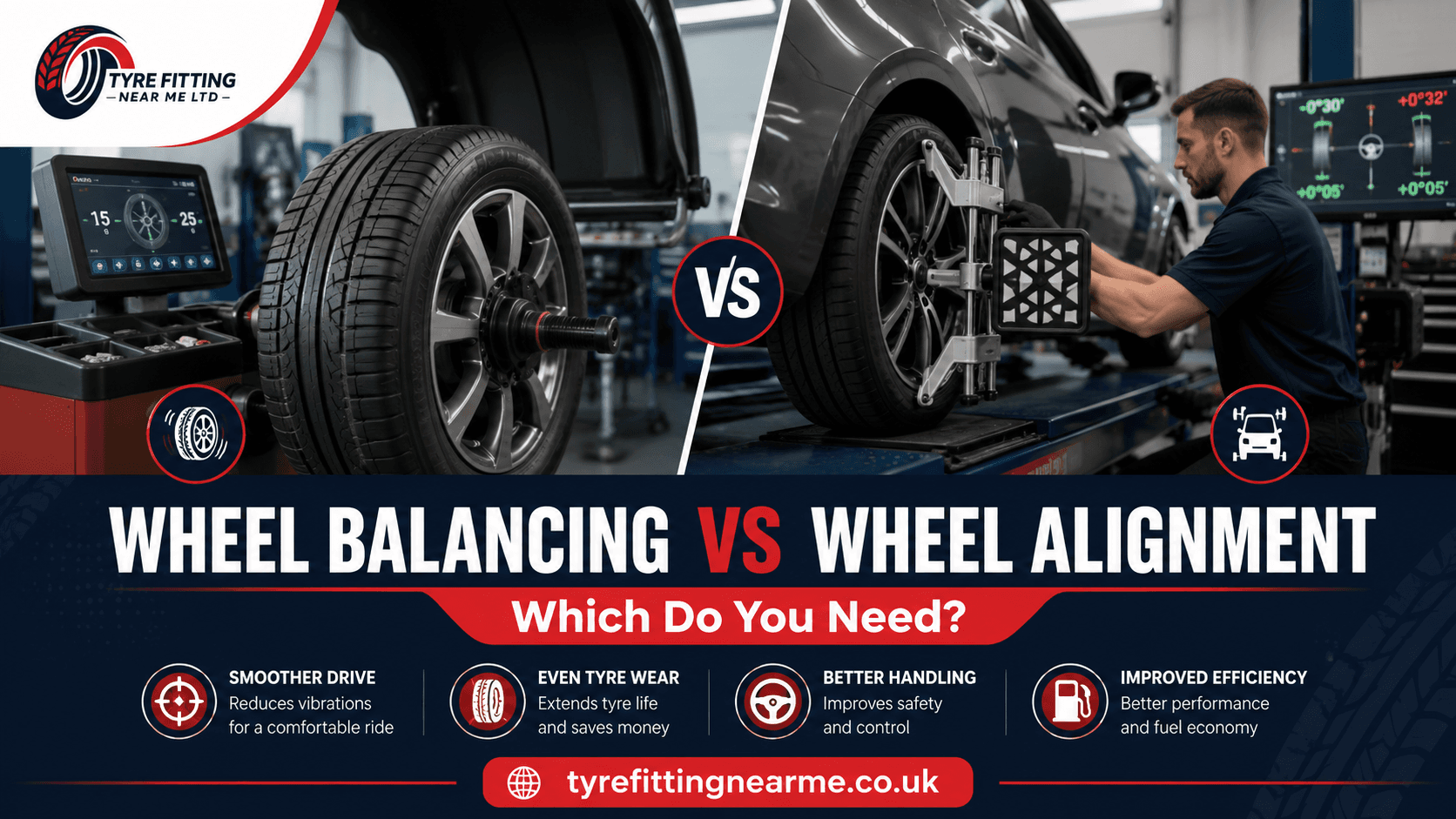
Wheel balancing corrects uneven weight distribution in the tyre and wheel assembly, which usually causes vibration at speed. Wheel alignment adjusts suspension angles, which usually causes pulling, crooked steering and uneven tyre wear. A technician should inspect the vehicle when symptoms overlap.
This guide helps UK drivers understand which service they need before booking a tyre or wheel check. It explains vibration, pulling, tracking, uneven tyre wear, pothole impact, cost factors and mobile tyre service limits in a clear way.
What is the difference between wheel balancing and wheel alignment?
Wheel balancing corrects uneven weight around the tyre and wheel assembly, while wheel alignment corrects the angles of the wheels through the steering and suspension system. Balancing usually solves speed-related vibration. Alignment usually solves pulling, off-centre steering and uneven tyre wear.
Wheel balancing focuses on rotation. The tyre and wheel assembly spins on a balancing machine, and the machine detects heavy or light spots. A technician adds small wheel weights to the rim so the wheel rotates evenly at road speed.
Wheel alignment focuses on direction. The technician measures wheel angles against the vehicle manufacturer’s specification and adjusts the steering or suspension geometry where possible. Correct alignment helps the tyres meet the road at the correct angle.
Service Corrects Main Symptom Works On Wheel balancing Uneven weight distribution Vibration or shaking at speed Tyre and wheel assembly Wheel alignment Incorrect wheel angles Pulling, crooked steering or uneven tyre wear Steering and suspension geometry
How do you know if you need wheel balancing or wheel alignment?
You usually need wheel balancing when the vehicle vibrates at speed, and you usually need wheel alignment when the car pulls, drifts, wears tyres unevenly or has an off-centre steering wheel. The symptom gives the first clue, but a full tyre and wheel inspection confirms the real cause.
Wheel imbalance often creates vibration through the steering wheel, seat or floor. This vibration may appear at motorway speed and may disappear at lower speed. Drivers with this symptom should check the dedicated wheel balancing service for steering wheel vibration.
Wheel misalignment often affects direction. The vehicle may pull to one side on a straight road, or the steering wheel may sit slightly crooked while the car drives forward. Uneven tyre wear can also show that the wheels are not meeting the road evenly.
Symptom Likely Cause Best First Check Steering wheel vibration at speed Wheel imbalance Wheel balancing Seat or floor vibration Rear wheel imbalance or tyre issue Wheel and tyre inspection Car pulls left or right Misalignment, tyre pressure or tyre condition Alignment and tyre pressure check Crooked steering wheel Wheel alignment issue Alignment check Uneven tyre wear Misalignment, pressure issue or suspension wear Tyre health and alignment check
What happens during wheel balancing?
Wheel balancing starts when a technician removes the wheel, mounts the tyre and wheel assembly on a balancing machine, spins the assembly and measures uneven weight distribution. The machine shows where weights should be fitted, and the technician adds the correct weight to the rim.
The process checks the complete tyre and wheel assembly, not only the tyre. The rim, tyre, valve and wheel weight position all affect rotational balance. A small imbalance can become noticeable when the wheel rotates quickly on the road.
The technician removes the wheel from the vehicle.
The technician mounts the wheel on a balancing machine.
The machine spins the tyre and wheel assembly.
The machine detects heavy and light points.
The technician fits the required wheel weights.
The technician spins the wheel again to confirm the balance.
Mobile balancing can be useful when the technician has the right equipment and the location is safe. Drivers who need tyres supplied and fitted at home, work or roadside can also use mobile tyre fitting for new tyres at home or work.
What happens during wheel alignment?
Wheel alignment measures and adjusts the wheel angles so the tyres meet the road according to the vehicle manufacturer’s specification. The main alignment angles include toe, camber and caster. UK drivers may also hear alignment called tracking.
Toe describes whether the wheels point inward or outward when viewed from above. Camber describes whether the wheel tilts inward or outward when viewed from the front. Caster describes the steering axis angle and affects steering return and straight-line stability.
Alignment Angle What It Means Possible Symptom Toe Wheels point inward or outward Feathered tyre wear or poor tracking Camber Wheel tilts inward or outward Inner-edge or outer-edge tyre wear Caster Steering axis angle Poor steering return or unstable steering feel
Tracking usually refers to a front-wheel toe adjustment. Four-wheel alignment checks all four wheels against the vehicle centreline and gives a more complete geometry reading. A vehicle with uneven tyre wear, crooked steering or pulling usually needs more than a quick visual check.
Why does your steering wheel vibrate at speed?
Steering wheel vibration at speed usually points toward wheel imbalance, front tyre damage, bent wheels or wheel runout. Wheel balancing is normally the first check when vibration appears at a repeatable speed, especially after new tyres, tyre rotation or pothole impact.
Front wheel imbalance often travels through the steering wheel because the front wheels connect directly to the steering system. Rear wheel imbalance can travel through the seat, floor or vehicle body. The vibration location helps the technician choose the first wheel position to inspect.
Vibration does not always mean balancing alone will fix the vehicle. A damaged tyre, bent rim, worn wheel bearing or brake problem can create similar shaking. A technician should inspect tyre condition, wheel shape and braking symptoms before confirming the repair.
Why does your car pull to one side or wear tyres unevenly?
A car usually pulls to one side or wears tyres unevenly when tyre pressure, tyre condition, wheel alignment or suspension geometry needs inspection. Alignment becomes the main check when the steering wheel sits crooked, the vehicle drifts on a straight road or the tread wears unevenly.
Tyre pressure can copy an alignment problem. One underinflated tyre can change rolling resistance and make the vehicle pull. A driver should check tyre pressure before booking alignment because pressure correction may reduce the pull.
Uneven tyre wear can show where the fault may sit. Inner-edge wear can suggest camber or toe issues. Outer-edge wear can suggest pressure, camber or suspension problems. Feathered tread can suggest toe misalignment. A free tyre health check for tread and sidewall condition can identify visible wear before a driver replaces tyres.
Tyre Wear Pattern Possible Cause Recommended Check Inner-edge wear Camber or toe issue Alignment inspection Outer-edge wear Underinflation, camber or suspension issue Pressure and alignment check Feathered tread Toe misalignment Tracking or four-wheel alignment Cupping or scalloping Suspension wear or wheel imbalance Suspension and balancing check
When should you get wheel balancing or wheel alignment checked?
A driver should get wheel balancing checked after new tyres, tyre refitting, tyre rotation, vibration or suspected lost wheel weights. A driver should get wheel alignment checked after pothole impact, kerb impact, suspension repair, pulling, crooked steering or uneven tyre wear.
New tyres normally need balancing because the tyre and rim assembly changes during fitting. Alignment does not automatically happen during tyre fitting because alignment adjusts suspension geometry, not wheel weight. Alignment becomes more important when old tyres show uneven wear or the vehicle already pulls.
Pothole and kerb impacts can affect both services. The impact can disturb alignment, bend a rim, damage the tyre sidewall or knock balance out. A driver should inspect the vehicle sooner when vibration, pulling or visible tyre damage appears after impact.
Situation Balancing Check Alignment Check Reason New tyres fitted Yes Sometimes New assemblies need smooth rotation Steering vibration appears Yes Only if wear or pulling exists Vibration usually starts with balance diagnosis Car pulls to one side No, unless vibration exists Yes Pulling usually starts with pressure and alignment checks Pothole or kerb impact Yes, if vibration appears Yes, if pulling appears Impact can affect wheels, tyres and suspension
Drivers comparing home fitting with a workshop visit can read mobile vs garage tyre fitting for balancing and equipment limits before choosing the service route.
Can you need wheel balancing and wheel alignment together?
A vehicle can need wheel balancing and wheel alignment together because both services correct different faults. New tyres may need balancing, while the old tyre wear pattern may show that alignment also needs checking. A pothole can also affect wheel balance and suspension geometry at the same time.
Wheel balancing does not include wheel alignment. A balancing machine cannot adjust toe, camber or caster. The technician must use alignment equipment to correct wheel angles. A balanced wheel can still point in the wrong direction.
Wheel alignment does not include wheel balancing. Alignment equipment cannot correct heavy or light spots in the wheel assembly. A correctly aligned vehicle can still vibrate when one wheel remains unbalanced.
Scenario Balancing Needed Alignment Needed Why New tyres fitted after uneven old tyre wear Yes Likely New wheels need balance, old wear suggests geometry issue Vibration and pulling after pothole impact Likely Likely Impact can affect balance and alignment Crooked steering without vibration Unlikely Likely Steering position usually links to alignment High-speed vibration with even tyre wear Likely Unclear Rotation symptoms usually start with balancing
How much does wheel balancing vs wheel alignment cost?
Wheel balancing and wheel alignment cost different amounts because each service uses different equipment, labour and adjustment methods. Balancing price usually depends on wheel count, tyre size and whether the service is included with tyre fitting. Alignment price usually depends on 2-wheel or 4-wheel measurement and adjustment complexity.
Mobile service conditions can also affect cost. The technician needs safe access, suitable parking, the correct tyre size and the locking wheel nut key where required. Drivers who want service cost details can compare the mobile tyre fitting price guide for UK drivers.
Price should not decide the service before diagnosis. A balancing service will not fix a vehicle that pulls because of toe misalignment. A tracking check will not fix vibration caused by an unbalanced wheel or bent rim.
What should UK drivers check before booking a mobile tyre service?
UK drivers should check the symptom, tyre condition, vehicle location, tyre size and locking wheel nut access before booking a mobile tyre service. Mobile tyre support works well at home, work or another safe location, but some wheel and suspension checks need workshop equipment.
Mobile tyre fitting can handle many replacement and balancing needs when the technician has the correct equipment. The vehicle must sit on stable ground with enough space around the wheel. A roadside location must be safe for both the driver and technician.
Wheel alignment usually needs specialist alignment equipment and a controlled setup. A mobile technician can identify the symptom and inspect tyre condition, but full alignment normally needs a garage or dedicated alignment rig. Drivers can use what you need ready for mobile tyre fitting before the technician arrives.
Locking wheel nut access matters because the technician cannot remove the wheel without the correct key or removal method. Drivers with a missing or damaged key should book locking wheel nut removal for tyre access before tyre fitting or wheel balancing.
Need help choosing the right tyre service?
Our mobile tyre team can match vibration, pulling, uneven tyre wear, tyre damage and roadside problems to the right next step. Book tyre fitting, wheel balancing, tyre repair or a safety check at your home, work or a safe location. Call now or request help online.
What questions do drivers ask about wheel balancing vs wheel alignment?
How do I know if I need a balance or alignment?
You usually need wheel balancing for vibration and wheel alignment for pulling, crooked steering or uneven tyre wear. Balancing checks the tyre and wheel assembly for uneven weight. Alignment checks wheel angles through the steering and suspension system. Tyre pressure, tyre damage, wheel shape and suspension condition should be inspected when symptoms overlap.
Which is more important, wheel balancing or alignment?
Neither service is always more important because both services fix different faults. Wheel balancing improves rotational smoothness when the vehicle vibrates. Wheel alignment improves straight tracking when the vehicle pulls or wears tyres unevenly. The more important service is the one that matches the symptom and inspection result.
What are the symptoms of an unbalanced wheel?
An unbalanced wheel usually causes vibration, shaking or wobbling at a repeatable speed. The steering wheel may shake when the front wheels are affected. The seat or floor may vibrate when rear wheels are affected. Damaged tyres, bent rims and brake issues can create similar symptoms.
Is wheel balancing really necessary?
Wheel balancing is necessary when tyre fitting or wheel imbalance affects smooth rotation. New tyre and rim assemblies can have small weight variations, so balancing helps the wheel rotate evenly. Unbalanced wheels can cause vibration, poor ride comfort and uneven tyre wear if the issue remains untreated.
Can bad wheel alignment cause vibration?
Bad wheel alignment can contribute to vibration, but wheel imbalance is usually the first check for speed-related shaking. Misalignment can wear tyres unevenly, and worn tread can then vibrate. Bent wheels, damaged tyres, brake faults and wheel bearing wear can also create vibration.
Can wheel balancing fix a car that pulls to one side?
Wheel balancing usually does not fix a car that pulls to one side. Pulling usually points toward tyre pressure, tyre condition, road camber, alignment or suspension geometry. Balancing corrects uneven rotational weight, not steering direction. A pressure check and alignment inspection should come first.
Do new tyres need wheel balancing and alignment?
New tyres normally need wheel balancing, but alignment depends on symptoms and previous tyre wear. Balancing supports smooth rotation after fitting. Alignment should be checked when old tyres wore unevenly, the vehicle pulls, the steering wheel sits off-centre or the vehicle recently hit a pothole.
Is tracking the same as wheel alignment?
Tracking usually means front-wheel toe adjustment in UK tyre-service language. Wheel alignment can include tracking, but full alignment can measure more geometry, including camber, caster and rear wheel position. Drivers should ask whether the service is basic tracking or four-wheel alignment.
Should I get wheel alignment after hitting a pothole?
You should get wheel alignment checked after a pothole when the car pulls, steering feels crooked or tyre wear changes. A pothole can also damage the tyre, bend the rim or disturb wheel balance. A technician should inspect tyres, wheels and suspension before confirming the correct repair.
How do I find the correct tyre size before booking?
You should check the tyre sidewall before booking mobile tyre fitting or replacement. The tyre size includes width, profile, rim size, load index and speed rating. Drivers can use the how to find your tyre size guide before ordering a replacement tyre.