
Mobile wheel balancing near me
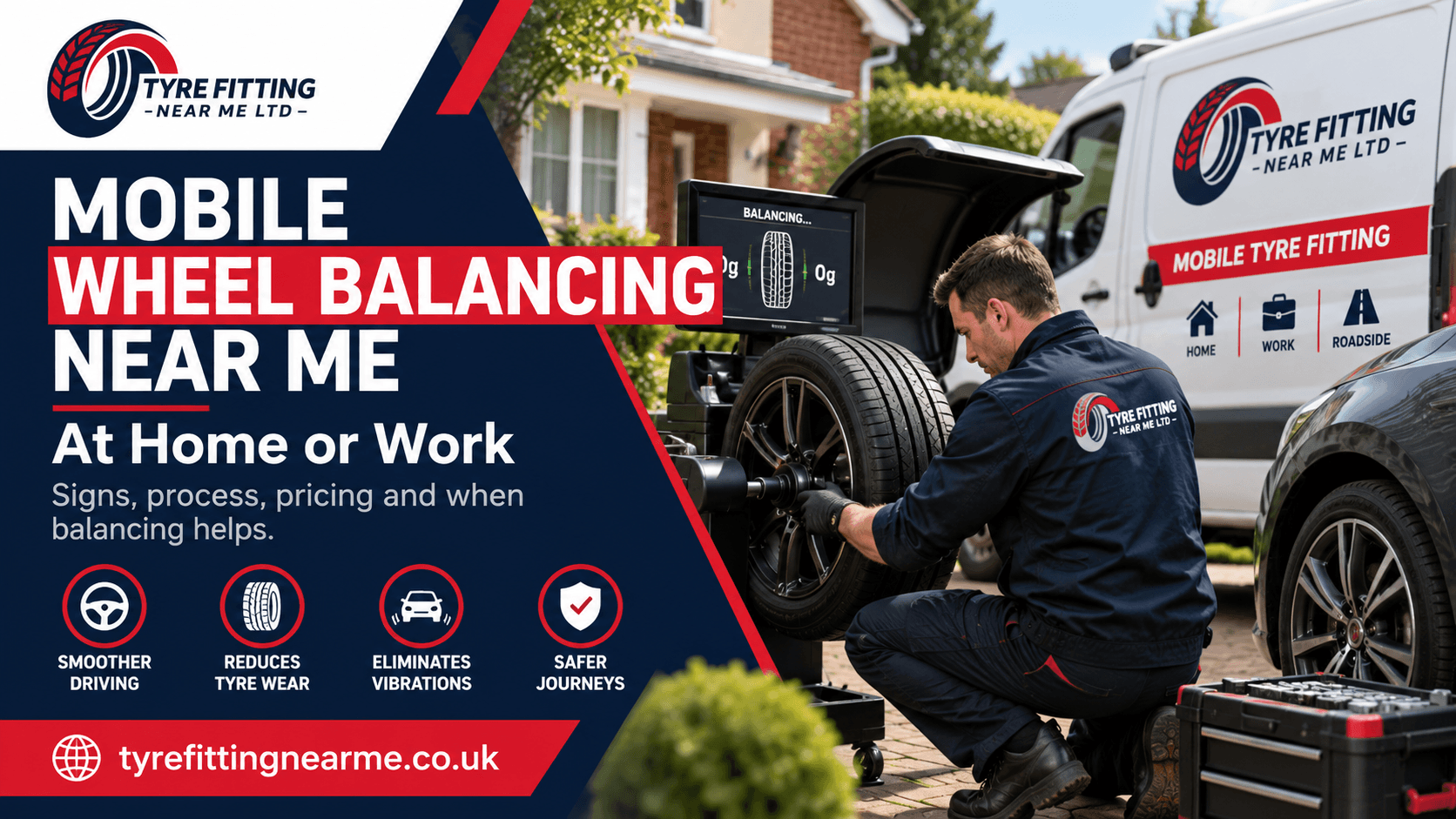
Mobile wheel balancing near me means a mobile tyre technician comes to your home, workplace or safe parking location, checks the wheel and tyre assembly, measures imbalance with a mobile wheel balancer, fits balancing weights, then refits the wheel with pressure, valve and wheel nut checks.
Drivers usually search for mobile wheel balancing when steering vibration, new tyres, uneven wear or pothole impact creates a driving problem. This guide explains when balancing helps, when another tyre or wheel service may be needed, and how mobile technicians handle the job safely without sending the driver to a garage.
What is mobile wheel balancing near me?
Mobile wheel balancing near me is an on-site wheel service where a mobile tyre technician travels to the vehicle and corrects uneven weight distribution in the wheel and tyre assembly. The technician uses a mobile wheel balancer, balancing weights and safety tools to reduce vibration and support smoother driving.
What problem does wheel balancing fix?
Wheel balancing fixes uneven weight distribution around a tyre and wheel assembly. An unbalanced wheel can create steering vibration, seat vibration, floor vibration or shaking that becomes more noticeable at road speed.
A dedicated mobile wheel balancing service page should handle booking, prices and direct service conversion. This blog supports that service page by explaining symptoms, process, equipment, safety checks and related tyre services.
What does a mobile tyre technician do?
A mobile tyre technician brings the wheel balancer, tyre tools, balancing weights, pressure equipment and torque wrench to the customer location. The technician checks the tyre and rim first because damage, abnormal wear or pressure loss can change the correct service decision.
Can wheel balancing be done at your home, work or roadside?
Wheel balancing can be done at home, work or another safe location when the vehicle has enough space around the wheel, stable ground and safe access for the technician. Roadside work depends on traffic, visibility and safety conditions, so unsafe live-road positions may need recovery or relocation first.
When is a home or workplace appointment suitable?
A home or workplace appointment works when the vehicle is parked on a driveway, private car park, office bay, fleet yard or other controlled area. The technician needs enough side clearance to remove the wheel and operate equipment safely.
Location Suitable Condition Driver Preparation Home driveway The vehicle sits on level ground with clear access. Share postcode, tyre size and parking instructions. Workplace car park The workplace allows mobile tyre work on site. Confirm permission and provide bay location. Fleet yard The depot has controlled vehicle movement and space. Provide vehicle list, tyre sizes and preferred time slot.
When is roadside wheel balancing not safe?
Roadside balancing is not suitable when fast traffic, poor visibility, narrow verges, unstable ground or motorway conditions create risk. A safer option may involve emergency tyre support first through 24/7 emergency tyre fitting.
How do you know your wheels need balancing?
Drivers usually suspect wheel imbalance when vibration appears at speed and changes as vehicle speed changes. Steering wheel shake, seat vibration, floor vibration and vibration after new tyres can point toward balancing, but tyre damage, pressure loss, alignment faults and suspension issues can create similar symptoms.
What vibration symptoms suggest wheel imbalance?
Speed-related vibration gives the strongest clue for wheel imbalance. The symptom still needs inspection because wheel balancing cannot fix every cause of shaking, pulling or uneven tyre wear.
Symptom Possible Cause Best Next Step Steering wheel vibration Front wheel imbalance, tyre defect or rim issue Book wheel inspection and balancing assessment. Seat or floor vibration Rear wheel imbalance or tyre condition issue Ask for all affected wheels to be checked. Vibration after new tyres Wheel imbalance after fitting or weight movement Request balancing after tyre fitting. Pulling with uneven wear Alignment, tracking, pressure or suspension issue Compare balancing with alignment before booking.
What other tyre problems can feel similar?
Slow pressure loss, punctures, valve leaks and tyre damage can feel like a balance issue because the vehicle becomes unstable. Drivers with repeated pressure loss should read slow puncture causes and what to do before assuming balancing is the only repair.
How does mobile wheel balancing work step by step?
Mobile wheel balancing follows a practical sequence: the driver books the visit, the technician checks access, the wheel is removed, the tyre and rim are inspected, the wheel is measured on the balancer, weights are fitted, the wheel is checked again, then pressure and wheel nuts are checked before handover.
What happens before the wheel is balanced?
The technician confirms vehicle details, tyre size, parking access and symptoms before starting work. The tyre, rim, valve and visible tread condition are checked before the wheel is placed on the balancer.
Booking details: The driver provides postcode, vehicle registration, tyre size and vibration symptoms.
Safe access check: The technician confirms stable ground and working space around the vehicle.
Tyre and rim inspection: The technician checks damage, pressure, valve condition and visible wear.
Wheel removal: The technician removes the wheel when the vehicle can be supported safely.
How are balancing weights fitted and checked?
The technician mounts the wheel on a mobile balancer and measures imbalance during rotation. The machine shows where weight correction is needed, and the technician fits adhesive or clip-on balancing weights where suitable.
Imbalance measurement: The balancer measures uneven weight distribution.
Weight placement: The technician fits balancing weights in the correct position.
Verification spin: The wheel is spun again to confirm the correction.
Final refit: The technician refits the wheel, checks pressure and tightens wheel nuts correctly.
Drivers who want the full appointment sequence can read how mobile tyre fitting works, because tyre fitting, wheel removal, balancing, pressure checks and torque checks share the same mobile service flow.
What equipment is used for mobile wheel balancing?
Mobile wheel balancing uses a mobile wheel balancer, wheel removal tools, balancing weights, tyre pressure equipment and a torque wrench. Equipment matters because the technician must measure imbalance properly, fit the correct weights, and complete final safety checks before the vehicle returns to normal driving.
What does a mobile wheel balancer measure?
A mobile wheel balancer measures uneven weight distribution across the wheel and tyre assembly. The machine identifies the amount and position of correction needed, so the technician can fit the right balancing weights.
What tools support the final safety check?
Final safety tools include a torque wrench, tyre pressure gauge, valve tools and visual inspection equipment. A TPMS warning can also affect the service decision, so drivers may need TPMS service and sensor replacement when the dashboard warning light stays on.
Equipment Purpose Why It Matters Mobile wheel balancer Measures imbalance in the wheel assembly. Confirms the van can perform balancing on site. Balancing weights Correct uneven weight distribution. Completes the actual balance correction. Torque wrench Supports correct wheel nut tightening. Protects the final wheel refit stage. Tyre pressure gauge Checks pressure after refitting. Connects balancing with tyre safety.
How much does mobile wheel balancing cost?
Mobile wheel balancing cost depends on the number of wheels, vehicle type, tyre size, location, call-out requirement, tyre condition and whether the job is part of a tyre fitting appointment. A driver should request a clear quote before dispatch and confirm whether balancing is priced per wheel or included with fitting.
What affects the price of mobile wheel balancing?
Price changes when the job needs more wheels, longer travel, larger tyres, specialist equipment or extra inspection. A clear booking request helps the provider quote the correct job before the van leaves.
Price Factor What Changes What To Ask Wheel count Two wheels take less time than four wheels. Ask whether the quote covers two wheels or all four. Vehicle type Cars, vans, SUVs and EVs can need different handling. Share your registration and tyre size. Call-out location Distance and access can affect attendance. Confirm whether a call-out fee applies. Tyre condition Damage can require repair or replacement first. Describe vibration, damage and pressure loss.
Is balancing included with mobile tyre fitting?
Balancing is often part of a tyre fitting workflow when new tyres are supplied and fitted, but the provider should confirm the exact package. Drivers comparing service time can use how long mobile tyre fitting takes to understand setup, fitting, balancing and final checks.
What is the difference between wheel balancing and wheel alignment?
Wheel balancing corrects weight imbalance in the rotating wheel and tyre assembly, while wheel alignment adjusts the angles of the wheels through tracking or geometry settings. Balancing usually relates to vibration at speed, while alignment usually relates to pulling, off-centre steering or uneven wear patterns.
When do you need wheel balancing instead of alignment?
A driver may need wheel balancing when vibration starts after new tyres, a balancing weight moves, or a wheel shakes at speed. Balancing targets rotation, so the service uses a wheel balancer and correction weights.
When do you need alignment or another inspection instead?
A driver may need alignment when the vehicle pulls to one side, the steering wheel sits off centre or tyre wear appears uneven across the tread. A driver may also need rim, suspension or tyre inspection when an impact caused the symptoms.
Service Main Problem Common Symptom Wheel balancing Uneven weight distribution Vibration at speed Wheel alignment Incorrect wheel angles Pulling or off-centre steering Tyre inspection Damage, pressure loss or unsafe tread Visible defects or repeated pressure loss
When should wheels be rebalanced after tyres, potholes or vibration?
Wheels should be checked or rebalanced after new tyre fitting, after a balancing weight comes loose, after wheel repair, or when speed-related vibration appears. Pothole or kerb impact needs inspection first because tyre sidewall damage, rim damage, tracking change or suspension faults can create similar symptoms.
Should new tyres be balanced after fitting?
New tyres should be balanced after fitting because the tyre and wheel become a new rotating assembly. Drivers booking mobile tyre fitting with wheel balancing should confirm whether fitting, new valve, balancing and disposal are included in the quote.
Does pothole impact mean balancing or repair?
Pothole impact can disturb balance, damage a rim or harm the tyre structure. A technician should inspect the wheel and tyre before deciding whether balancing, puncture repair, replacement or recovery is the right next step.
What safety checks matter before and after mobile wheel balancing?
Safety checks before and after mobile wheel balancing should cover tread condition, visible cuts, bulges, puncture position, tyre pressure, valve condition, TPMS warning status and wheel nut tightening. Balancing should never hide a tyre that needs repair, replacement or further inspection.
What tyre condition checks should be made?
Tyre condition checks should cover tread depth, cuts, lumps, bulges, exposed damage, abnormal wear and puncture location. A puncture in the wrong area may need replacement instead of repair, so drivers should use mobile puncture repair assessment when pressure loss or a visible nail appears.
What final pressure, valve and wheel nut checks matter?
Final checks should include tyre pressure, valve condition, TPMS status where fitted and wheel nut tightening. Run-flat tyres need specific attention because hidden internal damage can follow deflated driving, so drivers with run-flat issues should check run-flat tyre replacement.
Safety Check Reason Related Service Need Tread and sidewall check Visible damage can make balancing the wrong solution. Tyre repair or replacement Valve and pressure check Pressure loss can create unstable handling. Valve or TPMS service Wheel nut access Lost or damaged locking nuts can stop wheel removal. locking wheel nut removal
Book mobile wheel balancing when your vehicle has vibration, new tyres or suspected wheel imbalance. Share your postcode, registration, tyre size and safe parking details, then request a clear quote through book mobile wheel balancing at your location.
What should drivers ask before booking mobile wheel balancing?
Drivers should ask whether the van carries balancing equipment, whether the location is safe, how pricing works, and whether symptoms suggest balancing, repair or another tyre service. Good questions help the technician bring the correct tools and quote the correct job.
How long does mobile wheel balancing take?
Mobile wheel balancing time depends on wheel count, access and tyre condition. A simple two-wheel balance usually takes less time than all-four-wheel inspection. The technician may need more time when a locking wheel nut, tyre damage, poor access or pressure issue appears during the visit.
Can mobile wheel balancing fix steering vibration?
Mobile wheel balancing can fix steering vibration when wheel imbalance causes the vibration. Similar symptoms can come from tyre damage, rim damage, tyre pressure, tracking faults, wheel bearings or suspension. A technician should inspect the wheel and tyre before promising that balancing alone will solve the problem.
Can mobile tyre fitters balance wheels?
Mobile tyre fitters can balance wheels when the van carries suitable balancing equipment. The driver should ask whether the service includes wheel balancing, new valve checks, tyre pressure checks and wheel nut tightening. The answer should be confirmed before dispatch, not after the technician arrives.
Is wheel balancing included with new tyres?
Wheel balancing may be included with new tyre fitting when the provider sells a full fitting package. The driver should confirm what the quote includes before booking. The quote should state whether tyre fitting, balancing, valve replacement, old tyre disposal and any call-out charge are included.
Do all four wheels need balancing?
All four wheels may need balancing when vibration affects the whole vehicle or new tyres were fitted across the vehicle. Front-wheel vibration often appears through the steering wheel, while rear-wheel vibration may appear through the seat or floor. Inspection should decide the wheel count.
Can alloy wheels be balanced by a mobile fitter?
Alloy wheels can be balanced by a mobile fitter when the equipment and weights suit the wheel design. The technician may use adhesive weights or clip-on weights depending on the wheel. The driver should mention alloy wheels before booking so the technician brings suitable parts.
Can mobile wheel balancing be done in bad weather?
Mobile wheel balancing can only happen when weather and ground conditions allow safe work. Heavy rain, poor visibility, strong traffic exposure or unstable ground can make the appointment unsafe. The technician may move the job to a safer place or rearrange the booking.
Should I choose mobile or garage tyre service?
Mobile service suits drivers who need tyre and wheel work at home, work or a safe location. Garage service may suit wider mechanical diagnosis, major wheel repair or workshop-only equipment needs. Drivers comparing both options can read mobile vs garage tyre fitting.