
Do tyre sealants work
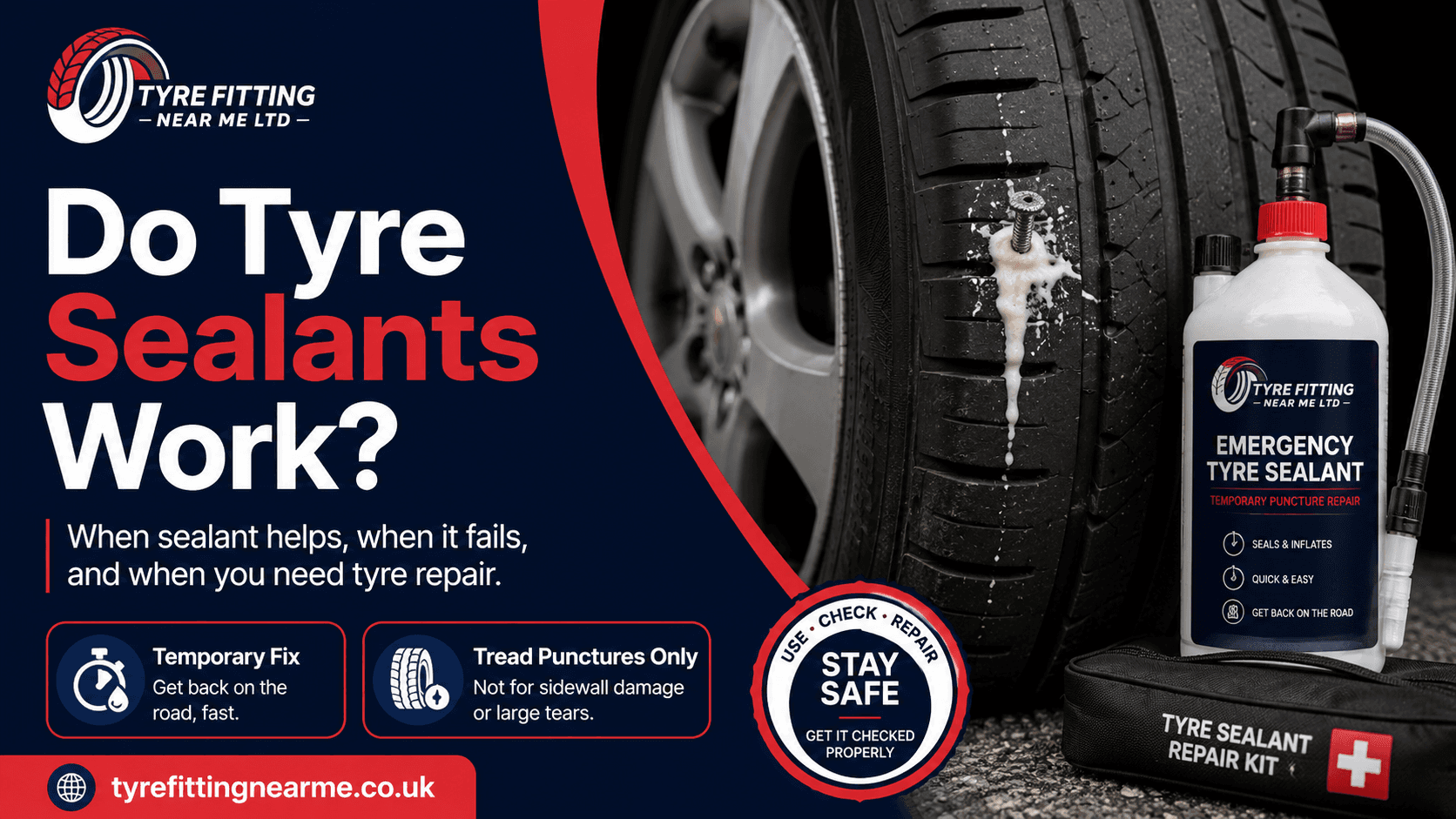
Tyre sealants work as a temporary emergency fix for certain small punctures in the tyre tread. A sealant can help restore enough pressure to reach safety, but it cannot replace a professional tyre repair. Sidewall damage, large tears, bead leaks, rim damage, and tyres driven while flat need proper inspection, repair, recovery, or replacement.
This guide explains when tyre sealant can help, when it should not be used, how it works inside the tyre, and what drivers should do after applying it. The main rule is simple: tyre sealant may get you moving, but a technician should still check the tyre before normal driving continues.
Do tyre sealants actually work?
Tyre sealants work when the puncture is small, the damage is in the tread area, and the tyre can still hold pressure after inflation. The sealant fills the puncture from inside the tyre and helps slow or stop air loss. The result is temporary mobility, not a permanent puncture repair.
Sealant works best when the tyre remains seated correctly on the rim and the puncture has not damaged the tyre structure. If the tyre has a repairable tread puncture, a technician may still be able to assess it properly after the vehicle reaches a safe location. For more detail, see our guide on repairable vs non-repairable punctures.
When does tyre sealant work best?
Tyre sealant works best on small nail punctures, screw punctures, and minor tread holes. The sealant moves toward the leaking air and forms a temporary plug around the opening. This can help the driver reach a garage, home, workplace, or safe roadside location.
When should tyre sealant not be trusted?
Tyre sealant should not be trusted on sidewall cuts, shoulder damage, large tears, bead leaks, cracked rims, or tyres that have been driven flat. These problems can affect the strength of the tyre, not just the air seal. Structural tyre damage needs inspection before the vehicle is driven again.
How does tyre sealant work inside a tyre?
Tyre sealant works by flowing inside the tyre and moving toward the puncture as air escapes. The liquid or gel gathers around the hole and forms a temporary seal. Tyre rotation helps spread the sealant across the inner surface, which improves the chance of sealing a small tread puncture.
Most post-puncture sealant kits use a bottle of sealant and a compressor. The sealant enters through the valve, then the compressor inflates the tyre to the recommended pressure. After that, a short controlled drive can help distribute the sealant inside the tyre.
How does sealant find the puncture?
Escaping air pulls the sealant toward the puncture opening. The pressure path guides the liquid to the damaged area, where the material collects and reduces air loss. This process works only when the puncture is small enough for the sealant to block.
Does tyre sealant harden or cure?
Some tyre sealants thicken, cure, or form a plug when exposed to air at the puncture point. The material may include gel, fibres, binders, or sealing particles. The finished seal remains temporary because the tyre still needs internal inspection before it can be considered safe for continued use.
What punctures can tyre sealant fix?
Tyre sealant can fix some small punctures in the central tread area. The exact puncture size depends on the product instructions, but many emergency kits are designed for small holes only. The location, tyre pressure, damage severity, and tyre condition decide whether sealant can work.
Puncture Type Sealant Suitability Best Next Step Small nail puncture in the tread Usually suitable if the hole is within the product limit Apply sealant, inflate the tyre, and arrange inspection Small screw puncture in the tread Usually suitable when the tyre still holds pressure Use the kit instructions and visit a tyre repair specialist Slow tread leak Conditionally suitable as an emergency option Book a proper puncture check if the tyre remains driveable Valve stem leak Usually unsuitable because the leak is not in the tread Ask a technician to inspect the valve and pressure system Bead or rim leak Usually unsuitable because the tyre is not sealing on the wheel Request bead, rim, and wheel inspection
Does tyre sealant work on nail punctures?
Tyre sealant can work on a small nail puncture when the nail has entered the tread area. The sealant must reach the hole and stop the air-loss path. A technician should still inspect the tyre because the nail may have damaged the internal liner or the repairable zone.
Does tyre sealant work on screw punctures?
Tyre sealant can work on a small screw puncture if the screw damage is inside the tread area and within the product limit. Screws can create wider or irregular holes, so the seal may not always hold. A sealed screw puncture should still be checked professionally.
Does tyre sealant work on slow punctures?
Tyre sealant can work on a slow puncture only when the leak comes from a small tread injury. Slow pressure loss can also come from a valve, bead, rim, or previous repair. If the tyre still holds enough air to drive safely, a proper inspection is usually the better option.
When will tyre sealant not work?
Tyre sealant will not work when the tyre damage is too large, too close to the sidewall, or related to the wheel seal rather than a tread puncture. Sealant is designed to slow air loss through a small hole. It cannot rebuild damaged tyre structure.
Damage Type Why Sealant Fails Recommended Action Sidewall cut The sidewall flexes and supports the tyre structure Stop driving and arrange tyre replacement or recovery Large tread tear The opening may be too large for sealant to plug Use professional tyre fitting or roadside assistance Bead leak The air escapes from the tyre-to-rim seating area Request bead and rim inspection Damaged rim The wheel may not hold an airtight seal Inspect the wheel before tyre repair or replacement Tyre driven flat Hidden internal sidewall damage may be present Remove the tyre and check its structure
Can tyre sealant fix sidewall damage?
Tyre sealant cannot safely fix sidewall damage. A sidewall cut, split, bubble, or puncture can weaken the tyre and increase failure risk while driving. Sidewall damage usually means the tyre needs replacement rather than liquid sealant.
Can tyre sealant fix large tears or bead leaks?
Tyre sealant cannot reliably fix large tears or bead leaks. A large tear may lose air faster than sealant can seal it, and a bead leak comes from the tyre’s seating area on the rim. Both problems need proper inspection before the vehicle is driven normally.
How long does tyre sealant last?
Tyre sealant lasts only as a short-term emergency solution. The allowed driving distance depends on the sealant kit, vehicle handbook, tyre condition, and puncture type. Some kits give a specific mileage limit, but drivers should use sealant only to reach a safe tyre repair location.
Sealant should not stay inside a damaged tyre as a long-term fix. A permanent repair requires tyre removal, internal inspection, and a clean repair surface. If the tyre cannot be repaired safely, replacement becomes the correct option.
Is tyre sealant permanent?
Tyre sealant is not permanent because it does not confirm the internal condition of the tyre. A sealed tyre may still have structural damage, sidewall stress, belt damage, or contamination. A technician must decide whether repair or replacement is safe.
Does tyre sealant expire?
Tyre sealant can expire because the formula may settle, thicken, separate, or lose sealing strength. Drivers should check the expiry date on the bottle or canister. A used or expired sealant kit should be replaced before the next emergency.
How far can you drive after using tyre sealant?
Drivers should drive only far enough to reach a safe tyre repair location after using sealant. The sealant kit and vehicle handbook should control the driving distance, pressure checks, and speed. If the tyre loses pressure again, the seal has failed or the damage is unsuitable.
Factor Why It Matters Driver Action Product distance limit Each sealant kit has its own usage boundary Follow the label and vehicle handbook Tyre pressure Low pressure increases heat and tyre stress Recheck pressure before continuing Puncture location Sidewall and shoulder damage increase risk Stop and arrange help if damage is unsafe Driving speed Speed increases heat, flex, and seal stress Use the reduced speed stated by the kit
What speed should you drive after using tyre sealant?
Drivers should use the reduced speed shown in the sealant kit instructions or vehicle handbook. A sealed tyre should not be treated as ready for normal motorway driving. Controlled driving protects the temporary seal until the tyre reaches inspection.
Should you drive straight to a garage after using sealant?
Drivers should travel straight to a tyre repair centre after using sealant. A technician needs to inspect the puncture, tyre pressure, tread area, internal condition, and residue level. If you need on-site help, our mobile tyre repair service can come to your home, work, or roadside location.
Is tyre sealant safe for car tyres?
Tyre sealant is safe only when the puncture is suitable, the tyre is not structurally damaged, and the product is used exactly as instructed. The driver must consider tyre pressure, TPMS compatibility, driving distance, speed, and repair follow-up.
A sealant kit should support emergency movement, not replace proper tyre care. If the tyre warning light stays on, the tyre keeps losing pressure, or the wheel feels unstable, the vehicle should be checked before further driving.
Can tyre sealant damage TPMS sensors?
Tyre sealant can affect TPMS sensors if the product is not compatible with tyre pressure monitoring systems. Some sealants are marked as TPMS-safe, while others may contaminate the sensor. If the warning light stays active after sealant use, book a TPMS service.
Can tyre sealant leave residue inside the tyre?
Tyre sealant can leave sticky residue inside the tyre. That residue can make cleaning, inspection, and permanent repair harder. The driver should always tell the tyre technician that sealant has been used before the tyre is removed.
Can a tyre be repaired after using sealant?
A tyre can sometimes be repaired after using sealant, but the final decision depends on puncture location, puncture size, internal condition, distance driven, and workshop policy. Sealant residue can make the tyre harder to clean and assess.
A technician needs to remove the tyre and inspect the inside before deciding whether a repair is safe. Our guide on can a puncture be repaired explains when a tyre is more likely to be repaired or replaced.
Condition After Sealant Repair Possibility Technician Concern Small central tread puncture Possible after inspection Sealant residue may need cleaning Sidewall or shoulder damage Usually not repairable Structural damage creates safety risk Large puncture Usually not repairable The hole may exceed safe repair limits Tyre driven while flat Often not repairable Internal heat and sidewall damage may be present
Why do some garages refuse repair after sealant?
Some garages refuse repair after sealant because a safe patch or plug-and-patch repair needs a clean internal surface. Sealant can coat the liner, wheel, valve, tools, and working area. Heavy contamination can make a permanent repair less reliable.
What should you tell the tyre technician?
Drivers should tell the tyre technician that sealant was used, how far the vehicle was driven, and whether the tyre lost pressure again. This information helps the technician protect equipment, locate the problem, and decide whether repair or replacement is safer.
Should you use tyre sealant for a slow leak?
Drivers should not use tyre sealant as the first solution for a slow leak when the tyre still holds enough pressure to reach a repair specialist. A slow leak may come from a tread puncture, valve stem, bead seating, rim corrosion, or previous repair.
A professional leak check usually gives a cleaner and safer result than filling the tyre with sealant. If the tyre pressure is dropping quickly or the vehicle cannot be driven safely, emergency help becomes more suitable.
Is a slow leak always a puncture?
A slow leak is not always a puncture. Air can escape from the valve, bead, rim, previous repair, or tyre tread. The leak source should be found before using sealant, because liquid sealant may not help when the problem is outside the tread.
When is a slow leak better repaired professionally?
A slow leak is better repaired professionally when the tyre can still be inflated and driven safely. A technician can find the leak, remove the tyre if needed, inspect the internal structure, and complete a cleaner repair where the damage is repairable.
What is better: tyre sealant, tyre plug, spare wheel or professional repair?
The best option depends on the damage type, equipment available, driver skill, and distance to a safe repair location. Tyre sealant is fast and compact, but it has limits. A spare wheel can help with more damage types, while professional repair gives the safest long-term result when repair standards are met.
Method Best For Main Limitation Tyre sealant Small tread punctures during an emergency Temporary fix with residue and distance limits Tyre plug kit Certain tread punctures with the right tools and skill Incorrect fitting can create an unsafe repair Spare wheel Drivers with a safe place, jack, and usable spare Many vehicles no longer carry a full spare wheel Professional puncture repair Repairable tread punctures after inspection Requires a technician and proper equipment
Is tyre sealant better than a plug kit?
Tyre sealant is faster for many drivers because it works through the valve with a compressor. A plug kit can help with some tread punctures, but fitting quality matters. Both options should still be followed by professional inspection.
Is tyre sealant better than a spare wheel?
Tyre sealant is easier to store than a spare wheel, but it cannot help with every puncture. A spare wheel can be more useful for unsuitable sealant damage, but only when the driver has tools and a safe working area.
Is professional puncture repair the final solution?
Professional puncture repair is the final solution only when the tyre passes inspection and the damage sits in the repairable tread area. If the tyre fails inspection, replacement becomes the safer option. Drivers comparing replacement choices can read our guide on part-worn vs new tyres.
How do you use a tyre sealant kit correctly?
Drivers use a tyre sealant kit correctly by checking the damage, parking safely, reading the instructions, applying the sealant through the valve, inflating the tyre, driving carefully for distribution, and rechecking pressure. The process should finish with a tyre inspection, not normal driving.
What should you check before applying tyre sealant?
Drivers should check the puncture location, sidewall condition, rim condition, sealant expiry date, TPMS compatibility, and vehicle handbook before using sealant. If the tyre has visible structural damage, the driver should not apply sealant.
What should you do after applying tyre sealant?
Drivers should inflate the tyre to the recommended pressure, drive the short distance stated by the product, stop safely, and check the pressure again. If pressure drops again, the seal has failed or the damage is unsuitable.
Park the vehicle in a safe location away from traffic.
Read the sealant kit instructions and vehicle handbook.
Inspect the tyre for sidewall cuts, rim damage, or severe tearing.
Remove the valve cap and connect the sealant bottle or compressor hose.
Inject the sealant through the valve according to the kit instructions.
Inflate the tyre to the recommended vehicle pressure.
Drive carefully for the short distance stated by the sealant kit.
Stop safely, recheck pressure, and arrange professional tyre inspection.
Why might tyre sealant not work?
Tyre sealant might not work because the puncture is too large, the damage is in the sidewall, the leak comes from the valve or bead, the tyre has left the rim, the sealant has expired, or the compressor cannot restore pressure.
Symptom Likely Cause What To Do Tyre still leaking after sealant Puncture too large or outside the tread Stop driving and arrange inspection Sealant comes out of the hole Opening exceeds the sealant limit Do not rely on the tyre for travel Tyre will not inflate Severe damage, bead issue, or compressor problem Use roadside assistance or mobile tyre fitting Pressure drops again after driving The seal has failed or another leak exists Recheck pressure and visit a technician
Why is the tyre still leaking after sealant?
The tyre may still leak because the puncture is too large, the damage sits outside the tread, the valve leaks, the bead leaks, or the rim has damage. Persistent pressure loss means the tyre needs inspection before further driving.
Why will the tyre not inflate after sealant?
The tyre may not inflate because the bead has unseated, the compressor cannot build pressure, or the tyre has severe damage. A tyre that cannot hold pressure after sealant should not be driven. If the vehicle is stranded, use 24/7 emergency tyre fitting.
What is the difference between car tyre sealant and tubeless bike sealant?
Car tyre sealant and tubeless bike sealant both seal small punctures, but their usage is different. Car sealant usually acts after a puncture as an emergency mobility product. Bicycle tubeless sealant usually sits inside the tyre before damage and seals small holes during riding.
Feature Car Tyre Sealant Bicycle Tubeless Sealant Main role Emergency temporary repair after a puncture Preventative and reactive puncture sealing Typical use timing Applied after pressure loss Added before riding in a tubeless setup Follow-up Garage inspection and repair or replacement Periodic sealant check and top-up Main limitation Sidewall damage, large tears, TPMS risk Large cuts, dried sealant, clogged valves
How is car tyre sealant used?
Car tyre sealant is usually used after a puncture to restore temporary pressure and help the driver reach a safe repair location. Many kits apply sealant through the valve using a compressor. The tyre still needs inspection because the temporary seal does not prove structural safety.
How is bicycle tubeless sealant used?
Bicycle tubeless sealant is usually added before a puncture as part of a tubeless setup. The liquid coats the inside of the tyre and seals small holes during riding. Bike sealant also needs periodic checking because it can dry or thicken over time.
Need a tyre checked after using sealant? Book a professional inspection before normal driving resumes. Our team can check tread damage, pressure loss, TPMS condition, residue, and repair eligibility at your location. Book a free tyre health check.
What questions do people ask about tyre sealants?
How effective is tyre sealant?
Tyre sealant is effective for some small tread punctures when the product reaches the leak and the tyre can hold pressure. Puncture location, hole size, tyre condition, and correct inflation decide the outcome. A sealed tyre still needs inspection because the sealant does not confirm internal safety.
What are the disadvantages of tyre sealant?
Tyre sealant can leave residue, complicate repair, affect non-compatible TPMS sensors, and fail on sidewall damage or large holes. Some workshops may refuse repair after heavy gel contamination. Sealant also has distance and speed limits, so it should be used only as an emergency option.
Can tyre sealant fix a completely flat tyre?
Tyre sealant can fix a completely flat tyre only when the puncture is small, the tyre remains seated on the rim, and the tyre has not been damaged by flat driving. If the tyre will not inflate after sealant, recovery or mobile replacement is safer.
What size puncture can tyre sealant repair?
Tyre sealant can repair only the puncture size stated by the product instructions. Many kits are designed for small tread punctures only. Drivers should check the label and avoid using sealant on large tears, sidewall cuts, bead leaks, or rim damage.
Does tyre sealant work on sidewall punctures?
Tyre sealant does not work safely on sidewall punctures because the sidewall flexes and supports the tyre structure. A sidewall puncture can fail suddenly while driving. The safer action is tyre replacement, roadside assistance, or professional inspection.
Can tyre sealant ruin a tyre?
Tyre sealant can make repair harder, but the tyre damage usually decides whether the tyre is repairable. Sealant residue may contaminate the internal surface and make cleaning difficult. Severe damage, sidewall injury, or long driving on low pressure can make replacement necessary.
Can you use tyre sealant in run-flat tyres?
Tyre sealant is usually unnecessary in run-flat tyres because run-flat construction already supports limited driving after pressure loss. Drivers should follow the vehicle handbook and tyre manufacturer limits. If a run-flat tyre is damaged, our run-flat tyre replacement service can fit the correct tyre on site.
Should you replace tyre sealant after use?
Drivers should replace tyre sealant after use because many canisters are designed for one application only. A used or expired bottle may not seal a future puncture. The emergency kit should be restocked after the tyre has been repaired or replaced.
Related tyre help
mobile tyre fitting for new tyres fitted at home, work, or roadside.
mobile vs garage tyre fitting for choosing the right fitting option.
find your tyre size before ordering a replacement tyre.
wheel balancing if vibration appears after tyre work or wheel changes.