
Flat tyre on the motorway
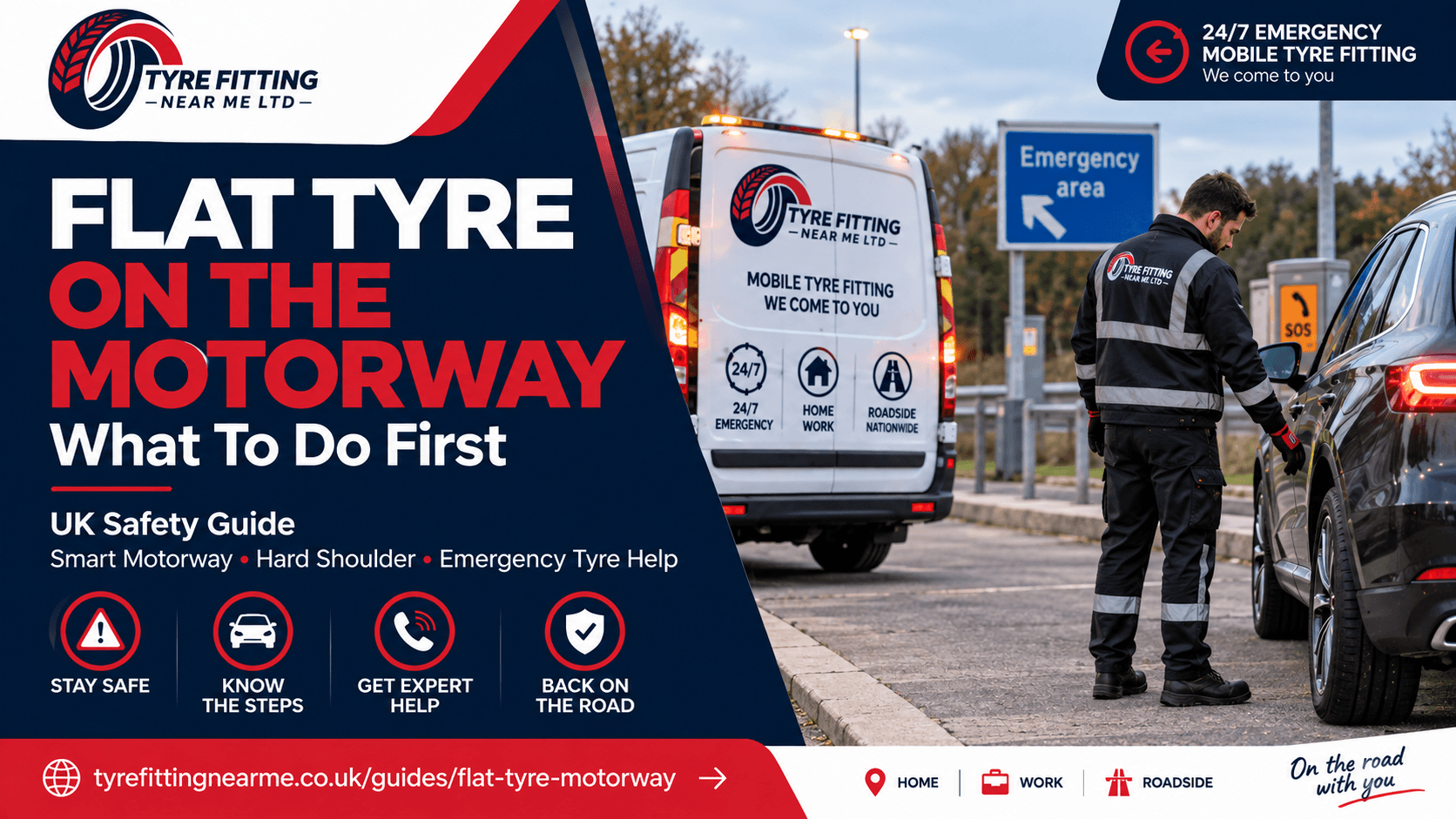
If you get a flat tyre on the motorway, slow down gradually, turn on your hazard lights, and try to reach a service area, next exit, emergency area, or hard shoulder. Do not change the tyre beside live traffic. Leave through the left-side doors only when safe, move behind a barrier, then call help.
This guide explains what UK drivers should do when a flat tyre happens on a motorway, including hard shoulder safety, smart motorway risks, emergency callouts, mobile tyre fitting limits, puncture repair decisions, run-flat tyre options, and tyre checks before long journeys.
What should you do first with a flat tyre on the motorway?
A flat tyre on the motorway needs a safety-first response. The driver should control the vehicle, warn other road users, reach the safest available stopping place, protect passengers, and call for professional help before thinking about tyre repair or replacement.
How do you control the car if the tyre blows out?
A tyre blowout can pull the vehicle to one side because the damaged tyre loses air pressure quickly. The driver should hold the steering wheel firmly, ease off the accelerator, avoid sudden braking, and keep the vehicle moving in a straight line where possible.
Hold the steering wheel firmly with both hands.
Ease off the accelerator gradually.
Avoid harsh braking or sharp steering.
Signal left when a safe lane movement becomes possible.
Move toward a service area, junction, emergency area, or hard shoulder.
How do you move toward a safer place?
A safer place means a location away from live motorway traffic. A service area or next junction gives the safest option when the vehicle remains controllable. An emergency area or hard shoulder becomes the fallback when the tyre failure makes leaving the motorway impossible.
Where should you stop with a flat tyre on the motorway?
A driver should stop in the safest available motorway location, not the nearest open space. The best order is service area, next junction, emergency area, hard shoulder, and live lane only when the vehicle cannot move any further.
Can you reach a motorway service area or next junction?
A service area or next junction gives the safest place for passengers, recovery, and tyre inspection. The driver should choose this option only when the vehicle remains stable, controllable, and not riding on the wheel rim.
Should you use the hard shoulder or emergency area?
An emergency area gives a designated stopping point on motorways where one is available. The hard shoulder gives a fallback stopping space, but the vehicle and passengers remain close to high-speed traffic.
Stopping Location When To Use It What To Do What To Avoid Service area The car remains controllable Park away from moving traffic Driving further on a shredded tyre Next junction The tyre allows controlled movement Signal left and leave the motorway Driving at motorway speed on a flat tyre Emergency area A refuge appears before full failure Stop inside the area and call for help Leaving the area without advice Hard shoulder The vehicle cannot leave the motorway Stop far left and turn wheels left Changing the tyre beside traffic Live lane The vehicle cannot move further Use hazards and call 999 if unsafe Walking on the carriageway
What should you do after stopping on the hard shoulder?
A hard shoulder stop needs quick passenger protection because the vehicle remains beside fast-moving traffic. The driver should use hazard lights, use sidelights in poor visibility, leave through the left-side doors when safe, and move passengers behind the safety barrier.
How should you leave the vehicle safely?
Vehicle occupants should leave through the left-side doors when the vehicle has stopped safely. The left-side exit keeps people away from the nearest traffic lane and reduces exposure to passing vehicles.
Action Reason Safety Note Switch on hazard lights Hazards warn approaching drivers Use sidelights during darkness or poor visibility Exit through left-side doors The left side faces away from live traffic A driver-side exit increases traffic exposure Move behind the barrier The barrier separates people from traffic Keep children close to an adult Call for help Motorway tyre work needs professional support Use recovery or emergency tyre help after safety
Why should you wait behind the safety barrier?
The safety barrier gives passengers physical separation from the carriageway. A stationary vehicle on the hard shoulder can still be struck by another vehicle, so people should not wait beside the car.
What should you do on a smart motorway with no hard shoulder?
A smart motorway flat tyre needs faster risk assessment because the hard shoulder may not exist or may operate as a live lane. The driver should aim for a service area, next exit, or emergency area. A live-lane stop requires 999 when safe exit is not possible.
What if you can reach an emergency area?
An emergency area gives the vehicle a dedicated refuge away from the running lane. The driver should stop fully inside the area, keep hazard lights on, use the SOS phone where available, and wait for official advice before rejoining.
What if the vehicle stops in a live lane?
A live-lane stop changes the problem from tyre damage to immediate motorway danger. The driver should keep seat belts on if leaving the vehicle is unsafe, keep hazard lights on, and call 999 immediately.
Scenario Driver Action Exit Vehicle? Who To Call Vehicle reaches emergency area Stop fully inside the refuge Yes, when left-side exit is safe SOS phone or National Highways Vehicle stops in left live lane Use hazards and assess exit route Only when safe 999 if danger exists Vehicle stops in middle lane Stay belted and visible No, unless instructed 999 immediately Vulnerable passenger cannot exit Keep seat belts on No, when barrier access is unsafe 999 immediately
Can you change a tyre on the motorway yourself?
A driver should not treat motorway tyre changing as a normal roadside repair. The practical safety answer is clear: tyre work beside motorway traffic exposes the driver to serious danger, especially on the offside wheel, hard shoulder, or smart motorway.
Is changing a tyre legal but unsafe?
The legal question and the safety question are different. Emergency stopping may be allowed, but working beside live motorway traffic creates a separate risk. A driver should call professional help instead of jacking the car beside passing vehicles.
When is roadside tyre work too dangerous?
Roadside tyre work becomes too dangerous when the vehicle position exposes the driver to moving traffic. Heavy traffic, darkness, rain, poor visibility, offside wheel damage, smart motorway conditions, and missing tools all make DIY tyre work unsafe.
Situation Risk Recommended Action Offside tyre puncture The driver stands near traffic Call recovery or tyre help Live lane stop Traffic can strike the vehicle Call 999 Hard shoulder stop Passing traffic remains close Move behind the barrier Motorway services The vehicle has a safer work area Book mobile tyre support
Who should you call for a flat tyre on the motorway?
The first call depends on the vehicle location and passenger safety. A live-lane stop, trapped occupant, vulnerable passenger, or immediate danger needs 999. A safe hard shoulder or emergency area stop can involve National Highways, breakdown recovery, or emergency tyre support.
When should you call 999 or National Highways?
A driver should call 999 when the vehicle has stopped in a live lane, passengers cannot exit safely, or the situation creates immediate danger. National Highways becomes relevant when the vehicle has reached a safer motorway location and traffic support may be needed.
When should you call breakdown recovery or a mobile tyre fitter?
Breakdown recovery should be used when the vehicle needs moving to a safer place. A mobile tyre fitter becomes relevant after the vehicle reaches a safe working location, such as services, a car park, a driveway, or a recovery drop-off point.
Situation First Call Second Step Vehicle stopped in live lane 999 Wait for emergency instruction Vehicle stopped in emergency area SOS phone or National Highways Arrange recovery or tyre fitting Vehicle reaches services Emergency tyre provider Book 24/7 emergency tyre fitting for motorway punctures Wheel bolts cannot be removed Tyre technician Use locking wheel nut removal for stuck wheel bolts
Can a mobile tyre fitter attend a motorway flat tyre?
A mobile tyre fitter can help only when the vehicle is in a safe working location. A service area, safe roadside space, driveway, workplace, or recovery drop-off point can work. A live lane or exposed hard shoulder usually needs recovery first.
What safe location does a tyre fitter need?
A tyre fitter needs enough working space around the vehicle, safe traffic separation, a stable surface, and access to the wheel. A driver should book mobile tyre fitting at a safe roadside location only after reaching a safe place.
When do you need recovery before tyre fitting?
Recovery comes before tyre fitting when the vehicle cannot be worked on safely. A recovery operator can move the vehicle to motorway services, a depot, a garage, or another safe location where a technician can work.
Vehicle Location Can A Fitter Work? Better Option Live lane No Call 999 Exposed hard shoulder Usually no Use recovery first Emergency area Only after official advice Use SOS phone first Motorway services Usually yes Book mobile tyre support
Can you drive on a flat tyre to the next exit?
A driver should not drive normally on a flat tyre because the tyre, wheel rim, suspension, and steering control can deteriorate quickly. Short movement may be justified only to escape immediate motorway danger and reach a safer stopping place.
What damage can driving on a flat tyre cause?
A flat tyre loses its load-bearing shape after pressure loss. The rim can crush the sidewall, damage the wheel, and make the tyre unsuitable for repair. Drivers can read more in can you drive on a flat tyre safely.
When can you move only a short distance?
Short movement can make sense when the vehicle must escape a live lane or unsafe verge. The driver should move slowly, avoid harsh steering, and stop as soon as a safer place appears.
Damage Type What Happens Why It Matters Sidewall damage The tyre folds under vehicle weight The tyre usually cannot be repaired Wheel rim damage The rim contacts the road surface The wheel may need replacement Suspension stress The wheel assembly absorbs abnormal load The vehicle may need inspection Steering instability The vehicle pulls toward the damaged tyre The driver may lose lane control
Can you use a spare, space-saver or run-flat tyre on the motorway?
A spare tyre, space-saver tyre, or run-flat tyre can help only after the vehicle reaches a safe place. Many modern cars have no spare wheel, so the driver should check the vehicle equipment before a motorway journey.
What are the limits of a space-saver spare tyre?
A space-saver tyre provides temporary mobility, not normal motorway performance. The driver should follow the speed and distance limits printed on the spare tyre or stated in the vehicle handbook.
How far can a run-flat tyre usually be driven?
A run-flat tyre gives limited movement after pressure loss, but the driver still needs inspection and replacement advice. A punctured run-flat may need run-flat tyre replacement with manufacturer-approved tyres after motorway damage.
Tyre Option Use Case Limit Next Action Full-size spare Temporary replacement after safe parking Needs tools and safe working space Get professional inspection Space-saver spare Short emergency movement Speed and distance limits apply Drive to a tyre service Run-flat tyre Limited movement after pressure loss Manufacturer limits apply Book run-flat inspection Tyre sealant Small tread puncture after safe parking Cannot fix sidewall or blowout damage Read do tyre sealants work for small punctures
Can a motorway puncture be repaired or must the tyre be replaced?
A motorway puncture can be repaired only when a professional inspection confirms the damage sits in the repairable tread area and the tyre has no structural damage. Sidewall damage, cuts, bulges, shredded rubber, and tyres driven flat usually need replacement.
What punctures are usually repairable?
A repairable puncture usually sits in the central tread area and has not damaged the tyre structure. A technician must remove the tyre from the wheel and inspect the inside before approving a repair.
What damage usually means tyre replacement?
Replacement becomes likely when the tyre has sidewall damage, shoulder damage, a bulge, a cut, or internal heat damage from being driven flat. A safe-site technician may offer mobile tyre repair for repairable tread punctures when the damage meets repair standards.
Damage Location Repair Possible? Required Action Central tread Possible after inspection Use professional puncture repair Outer shoulder Usually no Replace the tyre Sidewall No Replace the tyre Bulge or shredded tyre No Use recovery and replacement
How much can a flat tyre on the motorway cost?
Motorway flat tyre cost depends on the safety situation, vehicle location, tyre size, callout time, breakdown cover, and whether the vehicle needs recovery before fitting. A vehicle in services usually costs less to handle than a vehicle stuck in a live lane.
What affects recovery or callout cost?
Recovery cost changes when the vehicle needs towing, out-of-hours help, traffic support, or movement to a safe tyre-fitting location. Drivers can compare repair factors in puncture repair cost for UK mobile tyre help.
What affects tyre replacement cost?
Tyre replacement cost changes by tyre size, speed rating, load rating, brand, stock availability, and mobile fitting location. A driver should check the sidewall code before booking and use how to find your tyre size before booking.
Cost Factor Why Price Changes Example Impact Vehicle position Unsafe locations may need recovery Recovery cost can apply first Breakdown cover Membership may include recovery support Covered drivers may pay less upfront Tyre size Larger tyres usually cost more SUV tyres may cost more than small-car tyres Callout time Night or weekend support can affect price Emergency pricing may apply
How can you prevent a flat tyre before a motorway journey?
Pre-journey tyre checks reduce the chance of motorway tyre failure by identifying pressure loss, visible damage, worn tread, valve leaks, and missing tyre equipment before the car reaches high-speed traffic.
What tyre checks should you do before a long trip?
A motorway tyre check should include tyre pressure, tread depth, sidewall condition, valve condition, spare equipment, locking wheel nut key, and tyre warning lights. Drivers with warning light problems can book a TPMS service for tyre pressure warning faults.
How do tyre pressure and tread depth reduce risk?
Correct tyre pressure helps the tyre carry load and manage heat during motorway driving. A slow pressure loss may signal valve leaks, nails, rim damage, or puncture damage, which drivers can check through slow puncture causes and what to do.
Check What To Inspect Why It Matters Tyre pressure Use the vehicle handbook or door-label value Low pressure increases heat and instability Tread depth Check depth and uneven wear Low tread reduces wet grip Sidewall Look for cuts, cracks, and bulges Sidewall damage can cause sudden failure Wheel vibration Check vibration through the steering wheel Book wheel balancing for vibration and uneven tyre wear
Need tyre help after reaching safety? Call only after passengers are away from live motorway danger. Use emergency tyre fitting, recovery, or mobile tyre repair based on the vehicle location, tyre condition, and safe working space.
What questions do drivers ask about a flat tyre on the motorway?
Drivers usually ask motorway flat tyre questions in safety order: legality, warning triangles, vehicle exit, vulnerable passengers, tyre sealant, no breakdown cover, and location details for responders.
Is it illegal to change a tyre on the motorway?
A driver should not change a tyre beside live motorway traffic. Emergency stopping may be allowed, but roadside tyre work creates a separate safety risk. The safer action is to move behind the barrier, call help, and let a professional handle the tyre after the vehicle reaches a safe place.
Should I use a warning triangle on the motorway?
A driver should not use a warning triangle on the motorway. Placing a warning triangle requires walking near high-speed traffic, which increases danger. Hazard lights, sidelights in poor visibility, safe passenger positioning, and official help create a safer response.
Should I stay in the car after a flat tyre on the motorway?
A driver should leave the car only when a safe left-side exit exists. Passengers should move behind the barrier when safe. A driver should stay belted inside the vehicle and call 999 when the car stops in a live lane or leaving the car is unsafe.
What if I have children or pets in the car?
Children should leave with an adult only when the left-side exit and barrier route are safe. Pets usually remain secured inside the vehicle because loose animals can run into traffic and create another hazard for motorists, responders, and passengers.
What if someone cannot climb over the barrier?
A driver should call 999 when a disabled, elderly, injured, or vulnerable occupant cannot reach safety. The caller should explain the passenger condition, vehicle position, motorway direction, and lane risk so emergency responders can decide the safest support method.
Can I use tyre sealant on the motorway?
Tyre sealant should be used only after the vehicle reaches a safe working location. Sealant cannot safely fix sidewall damage, shredded tyres, blowouts, large cuts, or tyres damaged by driving flat. A professional tyre check should follow any temporary sealant use.
What if I do not have breakdown cover?
A driver without breakdown cover should still follow the same safety sequence. The driver should call 999 during immediate danger, contact motorway help where needed, and arrange paid recovery or emergency tyre support after the vehicle and passengers are safe.
What location details should I give when calling for help?
A driver should give the motorway name, travel direction, nearest junction, lane position, marker post details, and emergency area number where visible. A clear example is: “I have a flat tyre on the M6 northbound near junction 19, stopped in an emergency area.”