Buy tyres online and get them fitted
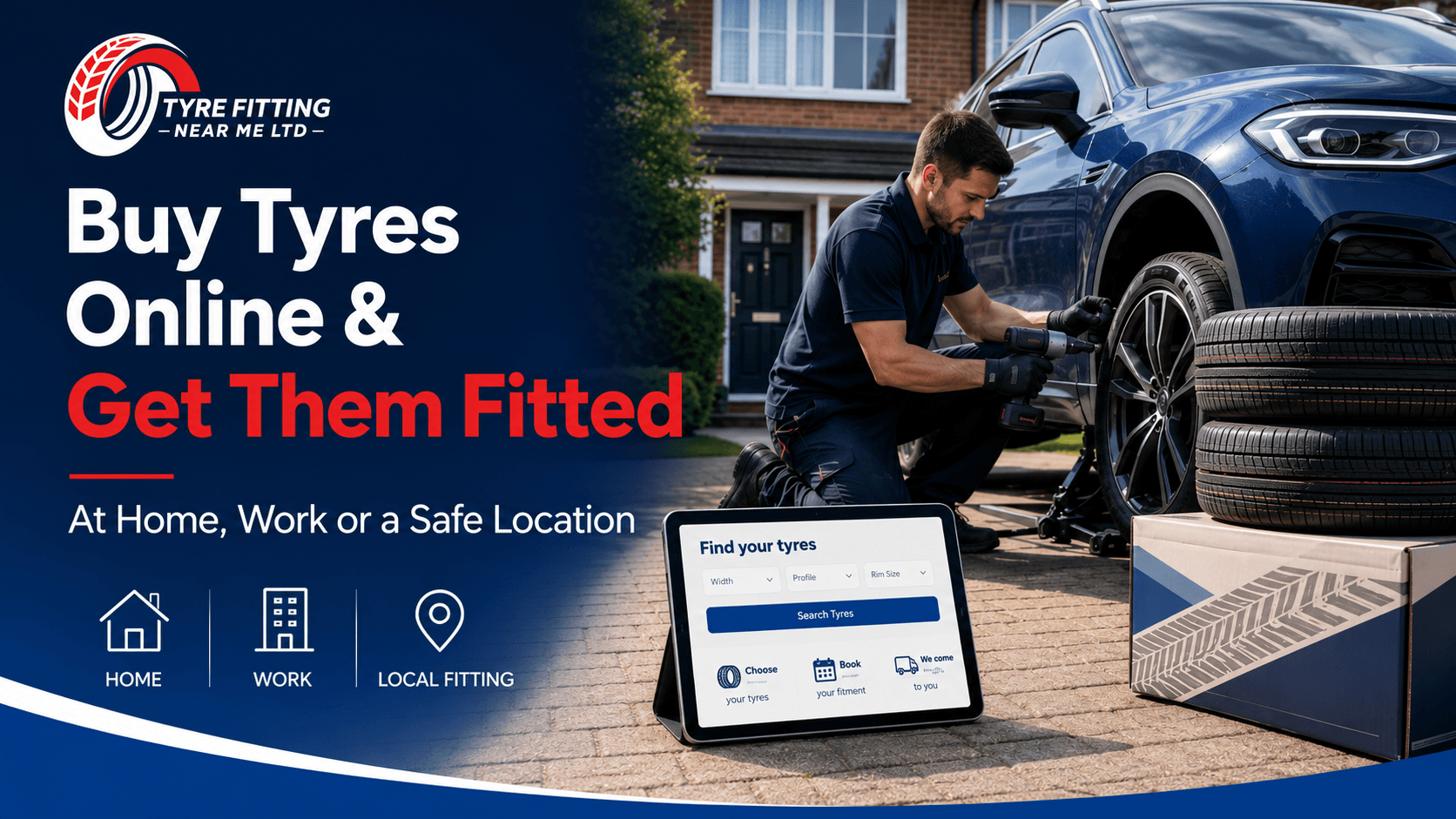
You can buy tyres online and get them fitted by choosing tyres by registration or tyre size, selecting mobile or local fitting, and booking a time slot. A mobile fitter can supply and fit tyres at home, work, or another safe location, with balancing, valves, disposal, and payment details confirmed before booking.
How do you buy tyres online and get them fitted?
You buy tyres online and get them fitted by entering your registration or tyre size, choosing suitable tyres, selecting mobile or local fitting, and confirming an appointment. The booking connects the tyre order with the fitting service, so the fitter receives the correct tyres and arrives with fitting equipment, balancing equipment, valves, and disposal instructions.
How do you search for tyres by registration or tyre size?
A tyre search tool uses the vehicle registration or the tyre sidewall size to match compatible tyre options. The registration route suits drivers who do not know their tyre size, while the tyre-size route suits drivers who can read numbers such as 205/55 R16 from the sidewall.
The tyre size carries width, profile, construction, and rim diameter data. The DVSA MOT inspection manual explains that a tyre size marking such as 215/55R15 includes an aspect ratio of 55 percent, which shows why the sidewall code matters before a fitter orders stock.
How do you choose your tyres before booking fitting?
Drivers should choose tyres by vehicle compatibility, driving pattern, budget, brand, season, speed rating, and load index. A family car, van, EV, SUV, or run-flat vehicle can require different load, noise, rolling resistance, or fitment checks.
Budget tyres suit low-mileage drivers who need legal replacement tyres at a lower purchase price.
Mid-range tyres suit drivers who want balanced mileage, wet grip, and price control.
Premium tyres suit higher-mileage drivers who prioritise braking, handling, comfort, and brand-specific performance.
Van tyres require load-rated checks because the tyre must support the vehicle and cargo weight.
EV tyres may need extra load, low rolling resistance, and reduced cabin-noise consideration.
How do you book a mobile or local tyre fitting appointment?
A fitting booking converts the tyre order into a service appointment. The booking should capture the fitting address, vehicle registration, contact number, tyre quantity, fitting date, and access notes.
Enter the vehicle registration or tyre size.
Select the tyre brand, tyre type, and quantity.
Choose mobile fitting, local garage fitting, or delivery-only fulfilment.
Confirm the postcode, appointment time, and payment method.
Check the confirmation message for tyre size, fitting location, and arrival window.
What happens after you pay for tyres online?
The supplier allocates boxed new tyres to the booking after payment confirmation. The fitter then brings the tyres to the appointment or receives them at the fitting location, depending on the fulfilment model.
Mobile supplied-and-fitted jobs work best when the customer confirms a safe parking space before the appointment. In mobile tyre fitting audits, I check the same conversion path every time: registration lookup, fitted-price confirmation, safe-location check, and appointment confirmation.
What is included when you buy tyres online with fitting?
Online tyres with fitting usually include tyre supply, professional fitting, wheel balancing, a standard rubber valve, pressure setting, and old tyre disposal where the provider states that package. Wheel alignment, TPMS sensor work, locking wheel nut problems, specialist valves, and emergency call-out may cost extra, so drivers should check the fitted-price details before payment.
Does the fitted price include fitting, balancing, valves and disposal?
A fitted tyre price should explain every operational item attached to the appointment. The safest buying decision compares the total fitted price, not the tyre-only price.
Fitting Item Typical Status Why Drivers Should Check Tyre supply Included when the booking says supplied and fitted The tyre order must match the vehicle size and quantity. Professional fitting Usually included in a fitted tyre price The fitter removes the old tyre and mounts the new tyre. Wheel balancing Commonly included with tyre fitting Balancing helps reduce vibration after the new tyre is fitted. Standard rubber valve Often included for standard wheels A damaged valve can cause air loss after fitting. Old tyre disposal Often included or shown as a disposal charge Disposal prevents the customer from keeping used casings. VAT Should be clear at checkout The final payment should not change after booking.
Does tyre fitting include wheel alignment or TPMS work?
Wheel alignment usually sits outside standard tyre fitting because alignment adjusts suspension geometry rather than replacing the tyre. A fitter may recommend alignment when the old tyres show uneven wear, steering pull, or abnormal shoulder wear.
TPMS work can also sit outside a basic tyre fitting package because sensors, valves, and warning light diagnosis need separate checks. The DVSA MOT inspection manual includes TPMS inspection for M1 vehicles first used on or after 1 January 2012, so drivers should treat warning lights as a separate safety signal.
What should you confirm before paying online?
Drivers should confirm the fitted-price stack before checkout because the cheapest tyre-only price may not be the cheapest fitted outcome. A clear checkout page should show tyre quantity, fitting type, fitting date, disposal, valves, balancing, VAT, and any mobile call-out fee.
Confirm the tyre size, speed rating, load index, and quantity.
Confirm whether fitting, balancing, valves, and disposal are included.
Confirm whether mobile fitting carries a separate call-out charge.
Confirm whether TPMS, locking wheel nut removal, or alignment costs extra.
Confirm whether the appointment can be changed after payment.
Can you get tyres fitted at home or work?
You can get tyres fitted at home or work when a mobile fitter covers your postcode and the vehicle has a safe, legal, and accessible place for fitting. The fitter brings a mobile van, tyre-changing equipment, balancing equipment, standard valves, and the ordered tyres, then fits them at the agreed address during the booked time window.
How does mobile tyre fitting at home work?
Mobile tyre fitting at home moves the tyre shop process to a driveway, private parking bay, or suitable off-road space. The fitter checks the vehicle, removes the wheel, removes the old tyre, fits the new tyre, balances the wheel, sets pressure, and refits the wheel.
The customer should provide access to the vehicle and the locking wheel nut key before the fitter starts. The fitter should stop the job when the location creates a safety risk, access risk, or vehicle support risk.
How does mobile tyre fitting at work work?
Workplace tyre fitting helps drivers replace tyres during office hours without losing time at a garage. The customer should confirm employer permission, parking access, security gate instructions, and a contact number for the fitter.
A workplace location must give the fitter enough room around the vehicle. A cramped loading bay, sloped kerb, restricted car park, or busy access road can prevent safe fitting.
Where can a mobile tyre fitter safely work?
A mobile tyre fitter can usually work on a driveway, private car park, workplace bay, fleet yard, or quiet off-road area. The fitter needs level ground, enough space around the wheel, and protection from moving traffic.
Location Type Suitable for Mobile Fitting? Safety Requirement Home driveway Usually suitable The vehicle needs level ground and clear access. Work car park Usually suitable The customer needs permission and a safe parking bay. Fleet yard Usually suitable The fitter needs space for equipment and wheel removal. Residential road Sometimes suitable The fitter must avoid traffic exposure and unsafe jacking positions. Live motorway lane Not suitable National Highways advises drivers not to stop in a live lane unless absolutely necessary. Hard shoulder or emergency area Breakdown assistance only National Highways tells drivers not to attempt repairs and to contact breakdown recovery after getting safe.
Where can you get tyres fitted near you?
You can get tyres fitted near you by entering your postcode and choosing a mobile fitter, local garage, branch, or approved fitting partner. Mobile fitting suits home and work appointments, while garage fitting suits drivers who need workshop facilities, alignment checks, specialist equipment, or a branch appointment near their location.
How does postcode-based tyre fitting work?
Postcode-based tyre fitting matches the customer location with available fitters, stock routes, and appointment slots. The booking system checks whether mobile fitting, local garage fitting, or branch fitting covers the postcode.
Local intent increases when the driver adds terms such as near me, same-day, home, work, or town names. The page should link to live area pages only when the service page exists, such as mobile tyre fitting in [town].
When should you choose a local garage instead of mobile fitting?
A local garage can be the better fitting option when the vehicle needs alignment, specialist diagnostics, lift access, or extra mechanical checks. A garage can also help when a private parking space is unavailable.
Choose garage fitting when wheel alignment needs checking after abnormal tyre wear.
Choose garage fitting when TPMS diagnosis needs workshop equipment.
Choose garage fitting when the vehicle cannot be parked safely for mobile service.
Choose garage fitting when the tyre order needs collection from a branch.
How should area pages be used for local tyre fitting?
Area pages should support real service coverage rather than create doorway pages. A live area page should include service availability, local fitting context, contact options, and clear internal links back to the main mobile tyre fitting service at your location.
The guide should link to town pages only where the business genuinely serves that location. A clean internal path helps users move from buying guidance to booking a local mobile fitter.
How much does it cost to buy tyres online and get them fitted?
The cost depends on tyre size, tyre brand, tyre type, fitting method, appointment urgency, and optional extras. A fitted tyre price should show the tyre, fitting labour, wheel balancing, standard valve, disposal, VAT, and any mobile call-out fee. Drivers should compare total fitted cost rather than tyre-only price.
What affects the total fitted tyre price?
The total fitted price changes when the tyre specification or service route changes. A larger rim, premium brand, run-flat construction, EV fitment, van load rating, or same-day mobile slot can affect availability and price.
Tyre size affects stock choice and unit price.
Tyre brand affects budget, mid-range, or premium cost.
Tyre type affects fitment complexity and supply availability.
Mobile fitting can add a call-out or location-based charge.
Same-day booking can depend on fitter capacity and local stock.
TPMS, alignment, or locking wheel nut problems can create extra charges.
Are cheap tyres online cheaper after fitting costs?
Cheap tyres online can stay cheaper after fitting costs when the fitted-price package includes the necessary service items. A tyre-only price can become less competitive when fitting, balancing, valves, disposal, VAT, and mobile call-out appear later.
Drivers should compare like-for-like totals across budget, mid-range, and premium tyres. A clear fitted-price table prevents the user from choosing a low tyre price that becomes expensive at checkout.
What hidden costs should you check before booking?
Hidden costs usually come from service items that the checkout does not show clearly. The safest buying process names each possible extra before payment.
Cost Item When It May Apply Question to Ask Before Booking Mobile call-out The fitter travels to a home, work, or roadside-safe location Does the fitted price include mobile attendance? Wheel alignment The vehicle shows uneven wear or steering pull Does the appointment include alignment or only tyre fitting? TPMS valve or sensor The warning light stays on or the sensor valve needs work Does the price include TPMS parts and reset? Locking wheel nut issue The key is missing, damaged, or incompatible Can the fitter remove locking wheel nuts? Specialist valve The wheel uses metal, TPMS, or non-standard valves Does the standard valve inclusion apply to this vehicle? Tyre disposal The old casing needs removal after fitting Does the price include old tyre disposal?
When can you get same-day or next-day tyre fitting?
You can get same-day or next-day tyre fitting when the correct tyre size is available, a fitter covers your postcode, and appointment capacity remains open. Same-day mobile fitting depends on local stock, travel time, weather, vehicle access, and booking cut-off times, so drivers should confirm availability before paying online.
Can you book same-day mobile tyre fitting?
Same-day mobile tyre fitting can be available when the supplier has the right tyre in stock and a fitter can reach the location safely. The fastest bookings usually include accurate registration, tyre size, postcode, phone number, and parking notes.
Urgent drivers should avoid guessing tyre size. A wrong tyre order can turn a same-day appointment into a reschedule.
What affects tyre fitting appointment availability?
Appointment availability depends on tyre stock, fitter capacity, postcode distance, vehicle access, seasonal demand, and weather. Winter weather, bank holidays, and puncture spikes can reduce same-day capacity.
Tyre size controls whether stock exists locally.
Postcode controls travel time and service coverage.
Time of booking controls same-day feasibility.
Vehicle type controls fitment complexity.
Weather controls safe working conditions for outdoor fitting.
What should urgent drivers check before ordering tyres?
Urgent drivers should confirm safety before speed. National Highways tells motorway drivers with vehicle problems to leave the carriageway at the next exit or pull into a service area where possible.
Check the tyre size before payment.
Check whether the vehicle can reach a safe location.
Check whether the fitter covers the postcode today.
Check whether the tyre pressure or TPMS warning needs diagnosis.
Check whether the locking wheel nut key is inside the vehicle.
What tyres do you need for your vehicle?
You need tyres that match the vehicle’s size, load requirement, speed rating, construction type, season, and manufacturer fitment guidance. Registration lookup gives a starting point, while the sidewall confirms the fitted tyre size. Vans, EVs, SUVs, 4x4s, and run-flat vehicles may need extra load, construction, or compatibility checks.
What tyre size do you need?
The tyre size appears on the tyre sidewall and usually follows a pattern such as 205/55 R16. The first number gives width in millimetres, the second number gives profile percentage, and the final number gives rim diameter in inches.
A registration lookup can reduce mistakes, but drivers should still compare the displayed result with the tyre currently fitted. The DVSA manual confirms that tyre size markings can include aspect ratio values, which means a small code difference can change fitment.
What do speed rating and load index mean?
Speed rating shows the maximum speed capability of the tyre under defined conditions. Load index shows the maximum weight that the tyre can carry under defined conditions.
Tyre Attribute What the Attribute Means Why the Attribute Matters Speed rating The tyre speed capability shown by a sidewall letter The tyre must suit the vehicle and its legal road use. Load index The tyre weight capacity shown by a sidewall number The tyre must support the axle load and vehicle use. Construction The tyre structure, such as radial construction Tyre structures should match correctly on the axle. Rim diameter The wheel size that the tyre fits The tyre must mount safely on the correct wheel.
Do EV, van, SUV or run-flat tyres need special checks?
EV tyres can need load, rolling resistance, and noise checks because battery weight and cabin quietness affect tyre selection. Van tyres can need load-rated specifications because commercial payload changes axle demands.
SUV and 4x4 tyres can need road-use, all-season, or all-terrain matching. Run-flat tyres can need manufacturer compatibility checks because the reinforced sidewall changes how the tyre behaves after pressure loss.
What safety checks matter before tyres are fitted?
Tyre safety checks should cover legal tread depth, tyre pressure, cuts, bulges, exposed cords, TPMS warnings, valve condition, puncture location, and vehicle roadworthiness. GOV.UK says drivers are responsible for keeping vehicles roadworthy, and tyres must have correct tread depth and be free of cuts and defects.
What is the UK legal tyre tread depth?
UK cars, light vans, and light trailers need at least 1.6 millimetres of tread. GOV.UK states that tread must run across the middle three-quarters and around the entire tyre for those vehicle types.
A driver should not treat a current MOT certificate as proof of current tyre safety. GOV.UK says a vehicle can be unsafe even with a current MOT certificate, and a dangerous-condition offence can bring a fine, driving ban, and penalty points.
Why do tyre pressure, TPMS and tyre condition matter?
Tyre pressure supports braking, handling, tread wear, and fuel efficiency. A visibly under-inflated tyre, damaged valve, TPMS warning, or sidewall bulge can indicate a roadworthiness issue before fitting.
The DVSA MOT manual lists tyre pressure monitoring system malfunction, seriously damaged or misaligned valves, under-inflation, exposed cords, and dangerous tread-depth defects within the tyre inspection framework. A mobile fitter should inspect the wheel and tyre before completing the job.
When is a puncture repair not suitable?
A puncture repair is not suitable when the tyre fails legal tread requirements, has sidewall damage, has exposed cords, has casing damage, shows bead damage, or has damage caused by under-inflation or over-inflation. TyreSafe says puncture repairs should follow British Standard BS AU 159 and depend on cause, location, tyre type, and condition.
TyreSafe also says repairs can only be carried out on the central three-quarters of the tyre. Damage close to or on the sidewall means repair is not possible, and the tyre may need replacement.
Can tyres be fitted on a roadside or motorway hard shoulder?
Mobile tyre fitting should not be treated as live-lane motorway repair. National Highways tells drivers not to stop in a live lane unless absolutely necessary, and its breakdown advice tells drivers who can exit safely to get behind a safety barrier and not attempt repairs.
A tyre problem on a motorway needs safety-first handling before any fitting decision. National Highways advises drivers who stop in an emergency area, lay-by, or hard shoulder to contact National Highways or a breakdown recovery service and wait away from moving traffic.
What should you have ready for a mobile tyre fitting appointment?
You should have the vehicle registration, tyre size, appointment address, contact number, locking wheel nut key, safe parking space, and payment confirmation ready before a mobile tyre fitting appointment. The fitter needs safe access around the vehicle, level ground where possible, and permission to work at the home, workplace, or fleet location.
What details should you confirm before the fitter arrives?
Drivers should confirm the details that connect the tyre order to the vehicle. A mismatch can delay fitting, waste a same-day slot, or require a new tyre order.
Vehicle registration
Tyre size and quantity
Fitting postcode and exact address
Contact number for arrival updates
Mobile fitting time window
Payment status and invoice details
Locking wheel nut key location
How should you prepare the vehicle and parking space?
The parking space should give the fitter safe access to each wheel being replaced. The vehicle should stand away from fast traffic, steep slopes, tight kerbs, soft ground, and blocked access routes.
A home driveway, quiet private bay, or workplace car park usually gives the safest mobile fitting environment. The customer should move bins, parked vehicles, or obstacles before the appointment when those objects restrict the fitter’s equipment.
What happens after the new tyres are fitted?
The fitter should refit each wheel, torque the wheel fixings to the correct setting, set tyre pressure, complete balancing where included, and remove old tyres when disposal forms part of the booking. The customer should check the invoice, tyre size, and any advisory notes before driving.
Drivers should recheck tyre pressure after the first journey when the provider recommends it. A TPMS warning, vibration, pulling, or air loss after fitting should trigger immediate contact with the fitter or service provider.
Ready to get tyres supplied and fitted at your location?
Book a mobile tyre fitting service at your location and confirm your tyre size, fitted price, appointment address, and safe parking details before payment. Choose home, work, or a suitable local place where the fitter can work safely.
What questions do drivers ask about buying tyres online and getting them fitted?
Drivers usually ask whether online tyre prices include fitting, whether mobile fitters can come to home or work, how same-day appointments work, and what safety limits apply. The answers below cover fitted-price checks, tyre size checks, mobile fitting locations, puncture repair limits, wheel balancing, delivery-only options, and wrong-size orders.
Can I buy tyres online and get them fitted the same day?
Yes, same-day fitting can be available when the correct tyre is in stock and a fitter has appointment capacity in your postcode. The booking depends on tyre size, vehicle type, location, payment time, weather, and fitter route planning. Drivers should confirm the tyre size and appointment window before payment because a wrong size can move the job to the next available slot.
Is mobile tyre fitting more expensive than garage fitting?
Mobile tyre fitting can cost more when the provider adds a call-out or location charge, but the total fitted price depends on the tyre, fitting package, and optional extras. Garage fitting can cost less for standard appointments, while mobile fitting saves travel time and waiting time. Drivers should compare tyre supply, fitting, balancing, valves, disposal, VAT, and call-out as one total.
Can I choose where my tyres are fitted after buying online?
Yes, many online tyre bookings let drivers choose mobile fitting, local garage fitting, branch fitting, or delivery-only fulfilment. Mobile fitting can cover home, work, fleet yards, and suitable off-road spaces. Garage fitting suits alignment checks, specialist diagnostics, or locations without safe parking. Drivers should choose the option that matches safety, access, time, and total fitted cost.
Does tyre fitting include wheel balancing?
Yes, many fitted tyre packages include wheel balancing, but drivers should confirm the inclusion before checkout. Wheel balancing helps reduce steering vibration and uneven wheel rotation after a new tyre is mounted. The booking should also show whether standard valves, pressure setting, old tyre disposal, and VAT are included. Alignment and TPMS work often need separate pricing.
Do I need to know my tyre size before ordering?
No, you do not always need to know your tyre size because registration lookup can suggest compatible tyres. The sidewall still provides the most useful confirmation because fitted wheels can differ from original specifications. Drivers should compare the search result with the current tyre marking, including width, profile, rim size, speed rating, and load index before booking fitting.
Can I buy tyres online without fitting?
Yes, some online tyre suppliers allow delivery-only orders where tyres go to the driver, a garage, or another nominated address. Delivery-only suits drivers who already have a trusted fitter or need tyres for later use. A delivery-only page should stay separate from a supplied-and-fitted page because the intent, checkout flow, service promise, and conversion action differ.
Can mobile fitters repair punctures as well as fit new tyres?
Yes, some mobile fitters can assess punctures, but repair depends on tyre condition, puncture location, tyre type, and safety rules. TyreSafe says car tyre puncture repairs should follow British Standard BS AU 159, and permanent repairs require internal and external inspection after tyre removal. Damage near the sidewall, exposed cords, low tread, or casing damage usually means replacement.
Can a mobile tyre fitter work on the motorway hard shoulder?
No, a mobile tyre fitter should not be treated as a motorway live-lane repair option. National Highways tells drivers with motorway problems to leave the carriageway at the next exit or use a service area where possible. When drivers cannot leave, safety advice prioritises getting left, getting safe, and getting help through National Highways, emergency services, or breakdown recovery.
Should I replace one tyre or two tyres?
One tyre can be replaced when the remaining tyre on the same axle has suitable tread, matching specification, and safe condition. Two tyres can be better when the opposite tyre shows significant wear, age, damage, or mismatched performance. A fitter should inspect the axle pair before advising because balanced grip across the axle supports braking, steering, and stability.
What happens if I order the wrong tyre size?
A wrong tyre size usually stops the fitting appointment because the tyre may not fit the wheel or vehicle safely. The provider may need to reorder the correct tyre, change the appointment, or adjust the price. Drivers can reduce the risk by checking registration lookup results against the tyre sidewall and confirming speed rating, load index, and quantity before payment.